
Culture · At the camp
The Majlis and Arabic Coffee: the Camp’s Oldest Tradition
The gahwa and dates handed to you when you arrive are the most genuinely Emirati thing that will happen all evening — and the one thing no operator explains. Both the majlis and Arabic coffee are on UNESCO’s heritage list. Here is how to drink it properly, including how to say no more.
- UNESCO listed, 2015
- Gahwa and dates included
- The cup shake means “enough”
- Right hand only
- VIP majlis seat AED 50
What a camp calls “majlis seating” and what a real majlis is are not the same thing. We say which is which below.
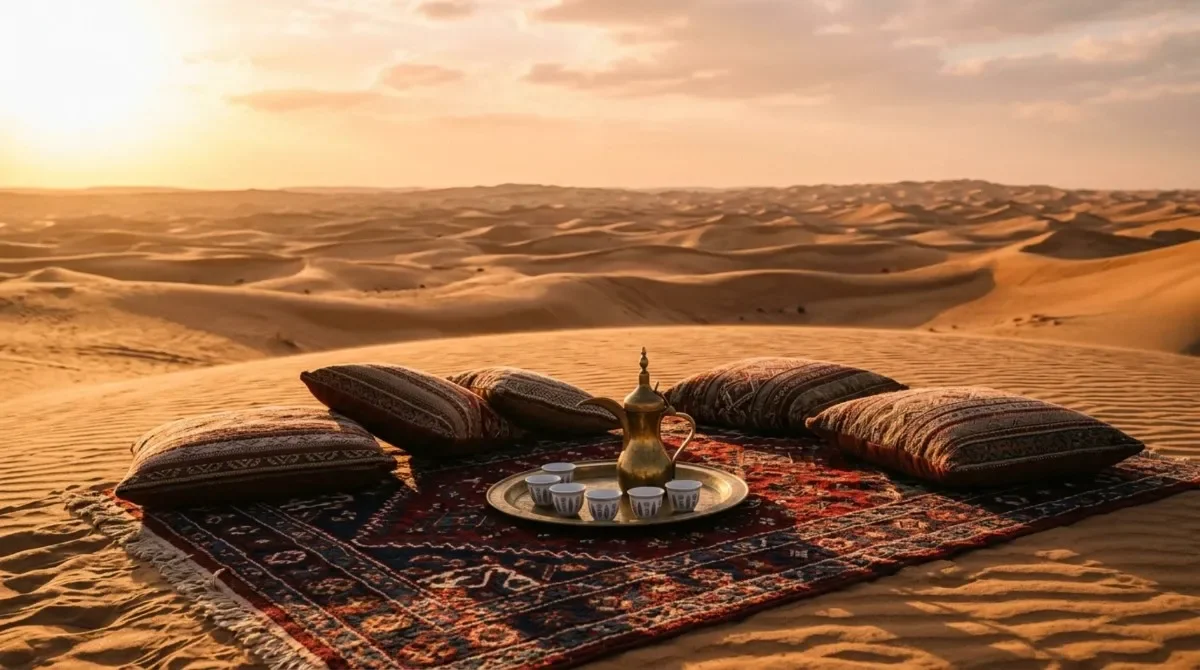
What it is
A place of sitting — and a form of government
Majlis means, literally, a place of sitting. Architecturally it is a reception room, often with its own door to the street so guests never walk through family space: carpets on the floor, cushions along the walls, a stove or a fire for the coffee.
Socially it is a great deal more than a room. It is where news was exchanged, disputes settled, condolences offered and weddings celebrated, and where elders passed on poetry and tribal history to people who could not read it anywhere. UNESCO inscribed “Majlis, a cultural and social space” on its Representative List in 2015, in a joint bid by the UAE, Saudi Arabia, Oman and Qatar.
And it was a system of government. Sheikh Zayed held an open majlis where any citizen could come and put a case to the ruler directly. UAE rulers still hold majlis sessions, particularly in Ramadan. That is why the word carries weight that “sitting room” does not.
Gahwa
How to drink Arabic coffee without getting it wrong
This is genuinely useful in the next hour of your life, and almost nowhere on the internet tells you.
- What it isLightly roasted beans ground with cardamom, often with saffron and cloves. Brewed in a long-spouted pot called a dallah and poured into small handleless cups called finjan. Pale gold, unsweetened, aromatic rather than bitter.
- Right handTake the cup with your right hand. Same for the dates and for food. The left hand is considered unclean across the region and this is the etiquette rule most worth remembering.
- Small poursThe server fills the cup only a little. That is deliberate — it keeps the coffee hot and it keeps him coming back, which is the point of the ritual.
- The cup shakeHe will keep refilling it. To say you have had enough, gently wobble the empty cup side to side as you hand it back. Handing it back still means “more, please.” This is the single most useful thing on this page.
- How manyCustom is one to three cups. Refusing the very first one outright is mildly discourteous — take one even if you do not want it.
- Why datesBecause the coffee is deliberately unsweetened. The date supplies the sugar the gahwa leaves out, and the pairing carries religious resonance from breaking a fast with dates.
Arabic coffee has its own UNESCO listing, also from 2015 — “Arabic coffee, a symbol of generosity.”
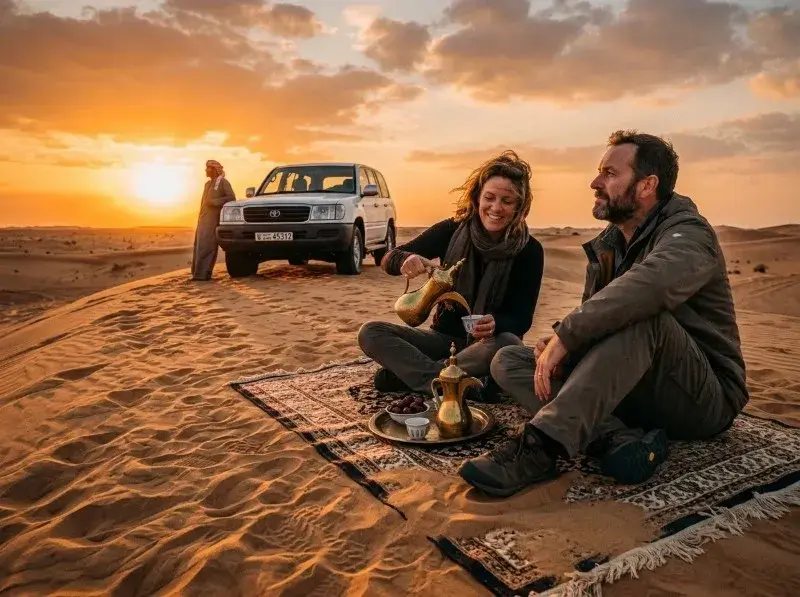
Etiquette
Sitting in a majlis, if you are ever invited to a real one
Off, if it is carpeted
Floor-seated and carpeted means shoes come off at the door. Follow what everyone else is doing and you will not go wrong.
Do not point your soles at anyone
Sit cross-legged or with your legs tucked to one side. Showing the soles of your feet to another person is genuinely rude here, and it is the mistake visitors make most often.
Right to left
Greet the room starting from the right. Stand when someone older or more senior comes in, and let elders sit and be served first.
Not with the meal
Gahwa is served before and after food, not alongside it. If you are handed a cup, it means the meal is either coming or finished.
Honesty
Our camp majlis versus a real majlis
We sell VIP majlis seating at AED 50 a head, so we should be clear about what that word is doing.
What is the same
- Low cushioned seating around a carpeted floor
- Gahwa poured from a dallah into finjan cups
- Dates alongside it, for the reason above
- Shoes off on the carpet
- Coffee offered before you have asked for anything
What is not
- A real majlis belongs to a household, with a host and a guest hierarchy
- It has an ongoing role in a community — disputes, condolences, news
- You are invited to one; you do not buy a seat in it
- Ours is a respectful staging of the form, not a re-enactment
- The AED 50 buys a front-row seat by the BBQ, not a cultural upgrade
The gahwa, the dates and the manner it is served in are real and worth paying attention to. The seating is seating. Full detail on what the AED 50 actually changes is on our VIP page.
FAQs
The majlis and gahwa — your questions
What is a majlis?
Literally “a place of sitting.” A reception room, often with its own street door, carpeted and cushioned, where guests are received. Socially it is where news was exchanged, disputes settled and oral heritage passed on. UNESCO inscribed it in 2015.
How do I say no to more Arabic coffee?
Gently wobble the empty cup side to side as you hand it back. Handing it back still means “more, please” — which is why people end up on their sixth cup.
How many cups should I drink?
Custom is one to three. Refusing the very first cup outright is mildly discourteous, so take one even if you would rather not.
Which hand do I use?
Right, always — for the cup, the dates and food. The left is considered unclean across the region.
Why is Arabic coffee yellow and not sweet?
It is lightly roasted and ground with cardamom, often with saffron, which gives the pale gold colour. It is deliberately unsweetened, which is why dates come with it.
Why are dates served with the coffee?
Because the coffee has no sugar in it. The date supplies the sweetness, and the pairing carries religious resonance from the tradition of breaking a fast with dates.
What is the pot called?
The long-spouted pot is a dallah; the small handleless cups are finjan. The person serving is the muqahwi, and he stays standing.
Do I take my shoes off in a majlis?
If it is carpeted and floor-seated, yes. Follow what everyone else does.
Is the majlis at a desert camp authentic?
It borrows the form — the seating, the gahwa, the dates — and those parts are real. A genuine majlis belongs to a household with a host and an ongoing community role, and you are invited to one rather than buying a seat. Ours is a respectful staging, not a re-enactment, and we would rather say that.
What does VIP majlis seating cost?
AED 50 per person. It buys a front-row cushioned seat by the live BBQ and no queueing for food. It does not change the camp, the food or the activities.
Is the majlis UNESCO listed?
Yes — “Majlis, a cultural and social space” was inscribed in 2015 by the UAE, Saudi Arabia, Oman and Qatar. Arabic coffee was inscribed in the same year.
What is the connection to Sheikh Zayed?
He held an open majlis where any citizen could put a case to the ruler directly. UAE rulers still hold majlis sessions, particularly during Ramadan. It is a civic tradition, not just a living room.
Read next
The majlis and the coffee served in it are both on UNESCO’s heritage list, as is falconry — the Abu Dhabi desert page sets out what that means and which parts of the evening are imported entertainment. Food arrives to your seat here; the BBQ menu page lists it. A front-row cushioned bay with an actual back to the seat is the VIP add-on at AED 50 a head.
The coffee is waiting
Gahwa and dates on arrival, included on every safari we run. Then the dunes, the camel, the fire and the food.