
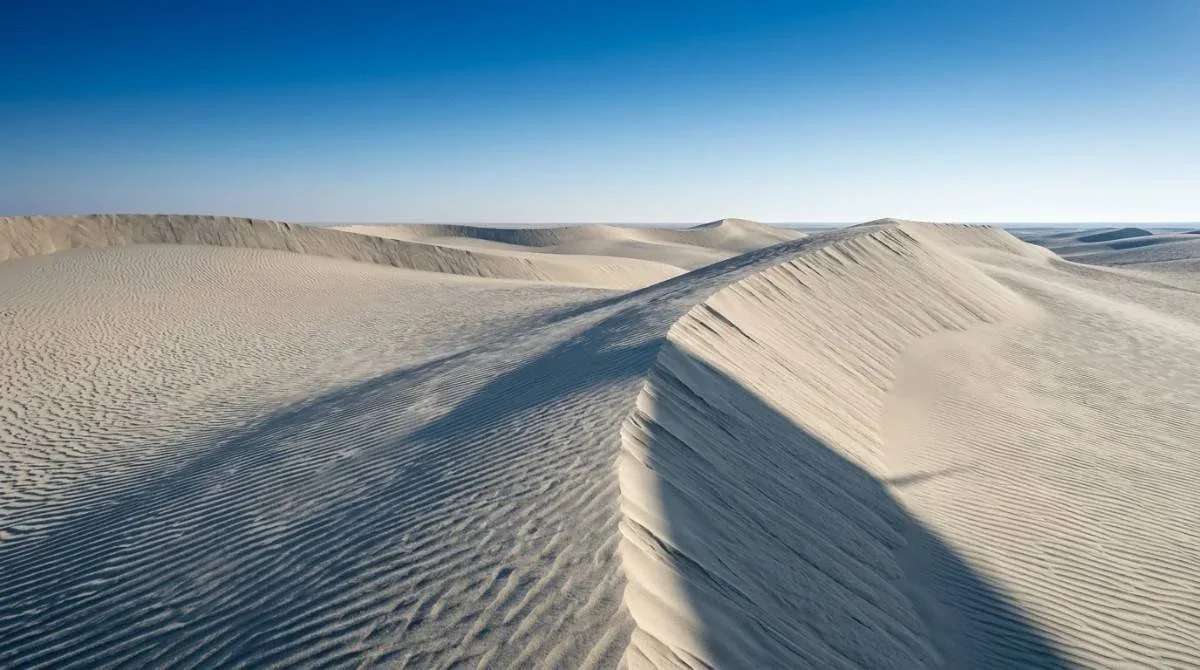
Desert Safari in January: The Coldest Nights and the Clearest Sky
The lowest daytime high of the year at 24.5°C, the coldest nights at 13.8°C, and air with nothing in it. January is the month the desert is at its most comfortable and visitors are at their most underdressed.
- 8 min read
- Al Khatim Desert
- Runs every day
- Same price all year
January is the coolest month of the Abu Dhabi year in both directions — the lowest average high on the calendar and the lowest average low. That combination does something no other month manages: it removes heat from the equation entirely, so nothing about the evening is a compromise with the weather.
It also introduces the one problem January has. You will live through nearly eleven degrees inside a single safari, almost all of it after the sun leaves the ridge, and most of that drop happens while you are sitting still in open desert. Here is what to expect, with the official figures rather than the usual “pleasant winter climate” line.
The short version
It is the mildest afternoon of the year. January averages 24.5°C by day — the lowest daytime high on the calendar. Nothing about the trip involves managing heat. You can climb a dune at four in the afternoon without thinking about it.
It is also the coldest night of the year. 13.8°C on average, and you meet it sitting in open desert with no walls. That is the whole of January’s difficulty, and it is solved by a jacket.
The air is at its cleanest. No summer haze, no dust season, no heat shimmer. Distant ridgelines stay sharp and the sky goes properly black by dinner.
The evening starts growing back. Sunset climbs from 5:46 PM on the 1st to 6:07 PM on the 31st. December was the floor; January is the turn.
Book the second half if you can. Same weather, far fewer people. The first week is the tail of the New Year rush.
What January actually looks like in numbers
Official Abu Dhabi climate normals, with December and February either side so you can see where the month sits.
| Measure | December | January | February |
|---|---|---|---|
| Average daytime high | 26.5°C | 24.5°C | 26.5°C |
| Average overnight low | 15.7°C | 13.8°C | 15.9°C |
| Rainfall | 7.8 mm | 12.5 mm | 8.1 mm |
| Sunset, 1st | 5:34 PM | 5:46 PM | 6:08 PM |
| Sunset, last day | 5:45 PM | 6:07 PM | 6:24 PM |
| Sea temperature | cooling | 22.7°C | 21.1°C, the year’s coldest |
| At the camp after dark | Cold | Coldest of the year | Cool, but easier |
January is the only month that holds the low end of both rows at once. December and February share an identical 26.5°C high; January sits two degrees under both of them, and its nights are nearly two degrees colder than either.
Read the sunset rows across and you watch the year turn. December ends at 5:45 PM and January opens at 5:46 — the floor of the year, to the minute. Then January hands back twenty-one minutes of evening and February keeps going. Daylight runs about ten hours and forty minutes, the shortest days you will get here.
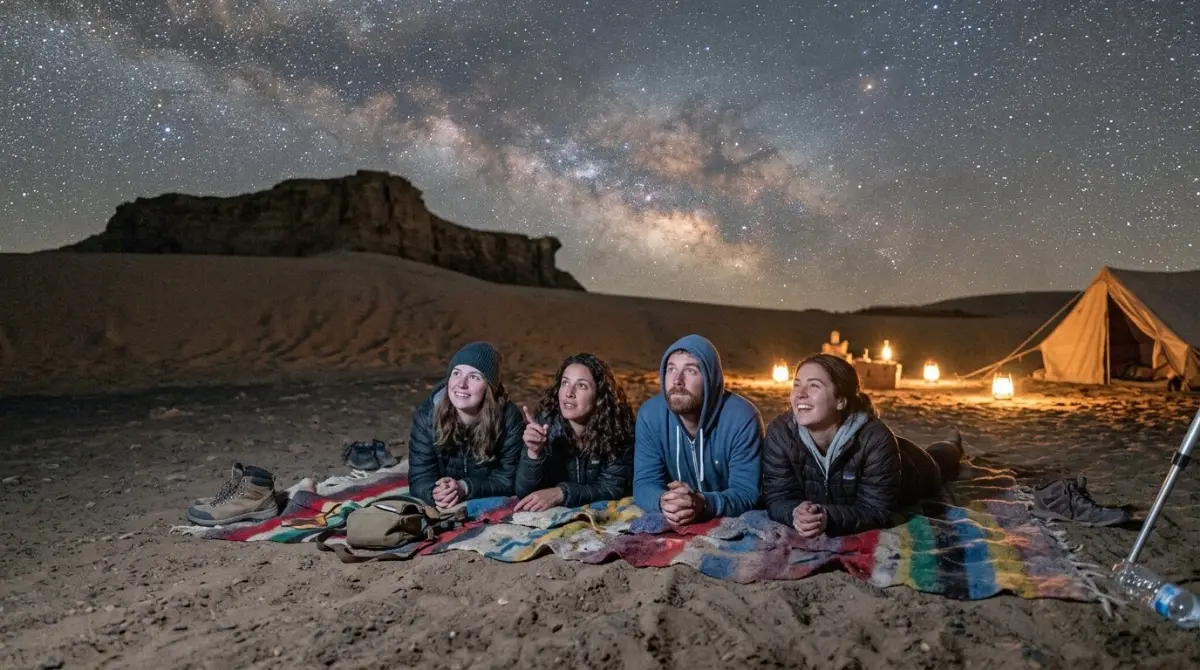
The eleven degrees you live through in one evening
Every month has a gap between its daytime high and its overnight low. January’s is 10.7 degrees, and the reason it matters is not the size of it — April’s is bigger — but where it falls. Almost all of January’s drop happens after sunset, and sunset happens early, so you spend the majority of your safari on the cold side of it.
The arc runs like this. Pickup at three in the afternoon in something close to 24°C, warm enough that a jacket feels ridiculous. An hour on the road. The dune drive in low gold light with the air already cooling. Sunset somewhere between 5:46 and 6:07 PM. And then the temperature falls away underneath you for the next four hours while you sit at a camp with an open side.
In August the wait is the other way round — you sit through an hour of residual heat before the evening becomes bearable. In January you feel the turn while you are still walking down from the sunset ridge. Which is the practical advice: carry the jacket up the dune with you, rather than leaving it in the vehicle to collect later.
There are two Januaries, and they have identical weather
The first week is the busiest stretch of the winter. New Year visitors are still in the country, the school holiday has not finished, and the camps run full. Book three or four days ahead for a shared seat and closer to a week for a private car.
From the second week the pressure falls away sharply. Flights home fill up, the visitors leave, and what remains is the same 24.5°C afternoon, the same clean sky and the same 13.8°C night — with a good deal more room in it.
Mid to late January is the best-value window of the entire winter, and it has nothing to do with price. Our prices do not move with the season. What changes is how many other people are standing on your dune.
| When | How full | What we would do |
|---|---|---|
| First week | Fullest of the winter | Book three to four days ahead; a week for a private car |
| Second week | Easing fast | One or two days is usually enough |
| Mid to late January | The quiet secret of the season | Weekday evenings are often available same day |
| Weekends, all month | Local families out in the cool | Reserve earlier than you would for a weekday |
What cool sand changes about the evening
The most underrated thing about a winter safari is sand you can actually touch. In high summer the surface can be too hot for bare feet in daylight; in January it is cool from pickup to the last show, and that changes several things at once.
Sandboarding gets easier. Beginners spend more time sitting, kneeling and falling over than they do standing, and cool dry sand is a far more forgiving surface for all three. Climbing back up a slipface is also much less work when you are not managing heat while you do it.
Dune walking becomes something you want to do. In summer most guests watch the dunes from a vehicle. In January people wander off up a ridge and stay there.
The camel ride runs longer. Not because we change anything, but because nobody is in a hurry to get down.
Quad bikes come with a warning. Wind chill at riding speed is the coldest thing you will feel all evening. If you want a quad in January, take it before sunset rather than after, and zip everything up.
What to wear on a January safari, and the mistake we watch every winter
Three layers carry you across the whole eleven degrees:
| Layer | Why it matters in January |
|---|---|
| T-shirt or light long sleeve | The 24.5°C afternoon is genuinely warm |
| Fleece or hoodie | Goes on within minutes of sunset |
| A real jacket, windproof if you have one | 13.8°C plus whatever the ridge is doing |
| Long trousers | Warmer after dark, and better on a camel or a quad |
| Closed shoes and socks | Sand stays cool all evening; sandals get cold fast |
| A scarf or shemagh | The sunset ridge is the windiest place you will stand |
| Sunglasses | Low winter sun sits straight in your eyes on the drive out |
| One extra layer per child | Small bodies lose heat faster on the late run home |
The mistake is the same one every year. A guest steps out of a hotel lobby at three in the afternoon into 24°C sunshine, decides the jacket is unnecessary, and leaves it in the room. Four hours later they are sitting in an open-sided tent in the coldest hour of the coldest month of the year. Take the layer. There is more on our what to wear guide.
One small upgrade earns its money in January specifically. VIP majlis seating is AED 50 a person and buys a cushioned front-row seat. In a warm month that is a comfort choice; in January, being off the sand and out of the draught is a different evening.
Does it rain in January, and does it matter?
January averages about 12.5 mm across roughly three days — one of the wettest months on a calendar where the annual total is tiny. Roughly twenty-eight days of the month are dry. Inland Al Khatim usually gets less than the coast does.
What rain does out here is worth knowing rather than fearing. Wet sand goes deep amber and holds a footprint like nothing else. The air afterwards is startlingly clean. And winter cloud produces the most dramatic sunsets of the year — the flat, cloudless skies of summer never give you anything like it.
Our drivers watch conditions through the afternoon and adjust the dune section if a track is running slick, the same judgement they apply to soft sand or strong wind. If a night is genuinely unsuitable we move you to another date and it costs you nothing.
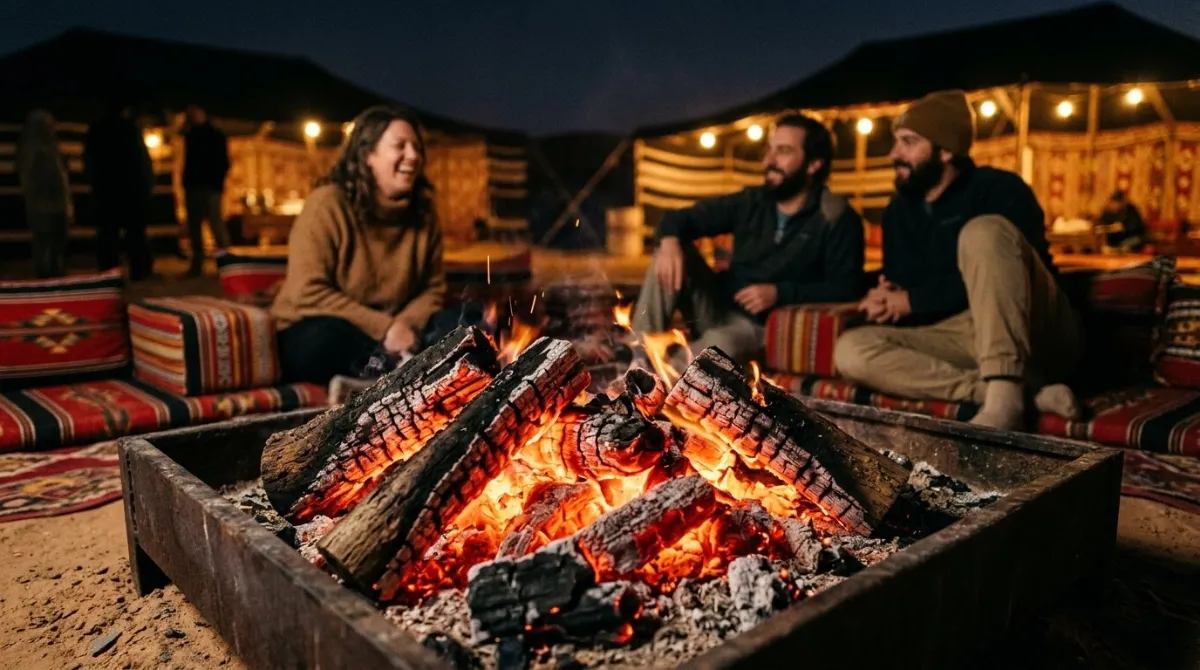
Morning or evening in January?
The evening, for almost everyone. The sunset, the BBQ buffet and the three live shows are what a January safari is, and they start from AED 35 a person if you drive out yourself.
The private morning drive is a different proposition — AED 799 for the car, dunes essentially to yourselves, and the cleanest light of the year raking across the ripples. It is also, honestly, the coldest thing we sell. A January dawn in open desert is not a mild experience, and we would rather say so than have you find out at six in the morning.
| Evening in January | Morning in January | |
|---|---|---|
| Price | From AED 35 per person | AED 799 per car |
| Temperature | Starts near 24.5°C, ends near 13.8°C | Starts at the coldest hour of the year |
| Light | Long golden hour into a 5:46–6:07 PM sunset | Low side-light and the longest shadows of the day |
| Company | A full camp evening | The dunes essentially to yourselves |
| Best for | First-timers, families, the whole programme | Photographers, couples, repeat guests |
Detail on both sits on the morning safari page and the evening safari page.
What a January safari costs
Prices do not move with the season. January costs the same as June — what changes with the calendar is the pickup time, not the bill. There is no New Year surcharge and no weekend premium.
| How you travel | Price | Unit |
|---|---|---|
| Self-drive to the camp | AED 35 | per person |
| Shared bus from Al Wahda or Mazyad Mall | AED 50 | per person |
| Hotel pickup, shared vehicle | AED 100 | per person |
| Private car, up to seven guests | AED 599 | per car |
| Private Land Cruiser | AED 800 | per car |
| Morning safari, private | AED 799 | per car |
Add-ons at the camp: quad bike AED 100 single or 150 double, VIP majlis seating AED 50 per person, long camel ride AED 300, falcon photo AED 30, extra dune bashing AED 150 per vehicle.
No deposit and no card details. You pay on arrival, cash or card, and you can cancel free up to twenty-four hours before pickup.
Who January suits, and who should pick another month
Book January if you want the mildest afternoons of the year; if Gulf heat has beaten you before; if you are travelling with young children who would never stay awake for a summer starfield; if you want to climb dunes rather than watch them from a vehicle; if you photograph and want air with nothing in it; or if you can travel mid-month, when peak conditions arrive with shoulder-season space.
Pick another month if you want to swim — 22.7°C is bracing and April to October is your window; if you genuinely will not carry a jacket, in which case February and March are more forgiving; if you want a late start, which is a June or July trait with sunset near 7:15 PM; if you plan to sleep out without proper bedding; or if you are hunting quiet and can only travel in the first week.
January questions we get on WhatsApp
Is January a good month for a desert safari in Abu Dhabi?
Yes, and for a lot of people it is the best of the twelve. Official normals give January a 24.5°C average high and a 13.8°C average low. The afternoon is shirtsleeve weather, the sand is cool enough to walk on barefoot at any hour, and the air is the cleanest of the year. The one condition is that you bring a proper jacket for the evening.
How cold does the Abu Dhabi desert get at night in January?
The average overnight low is 13.8°C, the coldest figure on the calendar. Out at Al Khatim, about 85 km inland, it can read a degree or two under that on a clear, still night. You are sitting in open desert when it happens, which is why it feels colder than the number suggests.
What time is sunset in Abu Dhabi in January?
It moves from about 5:46 PM on the 1st to about 6:07 PM on the 31st. January is the month the evening starts growing back — twenty-one minutes returned across four weeks, after December bottomed out.
What should I wear on a January desert safari?
Three layers. A t-shirt or light long sleeve for the 24.5°C pickup, a fleece for the hour after sunset, and a real jacket for the rest of the evening. Long trousers, closed shoes and socks. Children need one layer more than the adult next to them.
Does it rain in Abu Dhabi in January?
A little. January averages about 12.5 mm across roughly three days — one of the wettest months on a very dry calendar. A washout is close to unheard of, and the inland desert usually sees less than the coast. Rain also does something worth seeing: the sand turns deep amber and the air afterwards is extraordinarily clean.
Is January too cold for a desert safari?
Only if you arrive dressed for the hotel forecourt. The temperature range is comfortable by any European or North American standard — the problem is that a 24.5°C afternoon convinces people they will not need the jacket, and then they sit in open desert at 13.8°C for four hours.
Is January busy?
The first week is the busiest of the winter, because New Year visitors are still in the country. From the second week the pressure drops sharply while the weather does not change at all. Mid to late January is the quiet secret of the season.
Is the sea warm enough to swim in January?
Not really. Sea temperature sits around 22.7°C, which is bracing rather than pleasant for most people. If you want the beach and the desert in the same trip, April to October serves you far better.
Should I book the morning or the evening safari in January?
The evening, for almost everyone — the sunset, the buffet and the shows are what a January safari is. The private morning drive at AED 799 per car is a specialist pleasure: empty dunes in the cleanest air of the year, and also the coldest hour we sell.
The month either side
The December guide covers the month the fire starts doing real work, and February — the most even month of the year — is the one on the other side. Every package and pickup time is on the price and timings page. All twelve months are compared on the best time to go page.
Tell us your January date and we will tell you what to bring
Send the date, the package and how many of you there are. A real person replies, usually within a few minutes. If you are booking the first week we will tell you how far ahead to move.
Al Khatim Desert · Abu Dhabi | Pay on arrival · Free cancellation · No deposit