
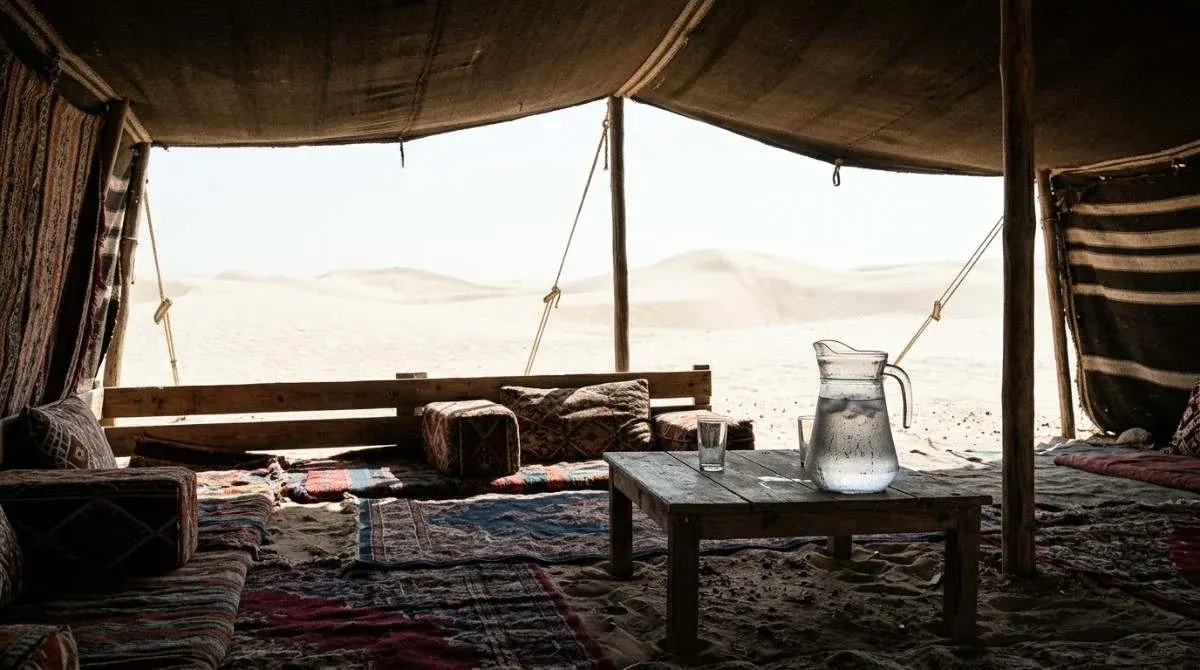
Summer Desert Safari in Abu Dhabi: What It Is Actually Like
Five months, 39°C to 43°C afternoons, and an evening trip that runs every single night. Summer changes the packing list and the crowd — it does not change whether the safari happens.
- 8 min read
- Al Khatim Desert
- Runs every day
- Same price all year
Search for a summer desert safari and you will find two kinds of page: operators pretending the heat is not there, and travel blogs telling you to wait until November. Neither is much use if you are already here in July.
This is the straight version. What summer actually does to the evening, what it does not touch, who should book it and who should not.
The short version
Nothing closes. The trip runs every day of the year. Pickup stays at 3:00 to 3:30 PM through the whole summer.
You never experience the daytime peak. The hottest hour of a summer day is spent inside an air-conditioned vehicle on the way out.
The desert is drier than the city. Coastal humidity can pass 80 per cent in July and August. The camp is 85 km inland. This is the single best reason to go.
The camps are empty. June and July are the quietest months we run. Same-day booking is usually fine.
The nights stay warm. 24.6°C in May up to 30.2°C in August. Summer evenings ease rather than cool.
Everything that still runs in summer
The most common summer question is some version of “is it still on?” It is, and so is all of it:
Dune bashing in a 4×4. Sunset photo stop. Short camel ride. Sandboarding. Welcome Arabic coffee, tea and dates. Unlimited soft drinks and water. Bedouin tent seating on carpets and cushions. Henna for the ladies. Arabic costume and 360° photo point. Sheesha corner. Hot starters. Belly dance, LED tanoura and the fire show. The full BBQ buffet, veg and non-veg. Separate washrooms. Stargazing, though it arrives late.
Live shows follow the Ramadan and religious-holiday schedule whenever those fall in the calendar. Otherwise the summer programme is the winter programme.
The five summer months, side by side
| Month | Day | Night | Rain | Sunset window | The character of it |
|---|---|---|---|---|---|
| May | 39.6°C | 24.6°C | 0.3 mm | 6:52 – 7:06 PM | Driest air of the year; the easiest of the five |
| June | 41.4°C | 26.9°C | 0.0 mm | 7:07 – 7:15 PM | Longest days, latest sunset, emptiest camp |
| July | 42.5°C | 29.7°C | 0.7 mm | 7:15 – 7:07 PM | The coast turns muggy; the desert does not |
| August | 43.4°C | 30.2°C | 0.1 mm | 7:06 – 6:42 PM | The hottest month of the year, both ways |
| September | 40.9°C | 27.4°C | 0.0 mm | 6:41 – 6:11 PM | The turn — the last week is already autumn |
Read the night column rather than the day column. That is the one you actually sit in. It swings by five and a half degrees across the five months, and the difference between a 24.6°C May evening and a 30.2°C August one is larger on the ground than the numbers suggest.
The sunset column peaks in early July at 7:15 PM and then falls away steadily. By the end of September it is 6:11 PM — more than an hour earlier — which is why September feels like two different months joined together.
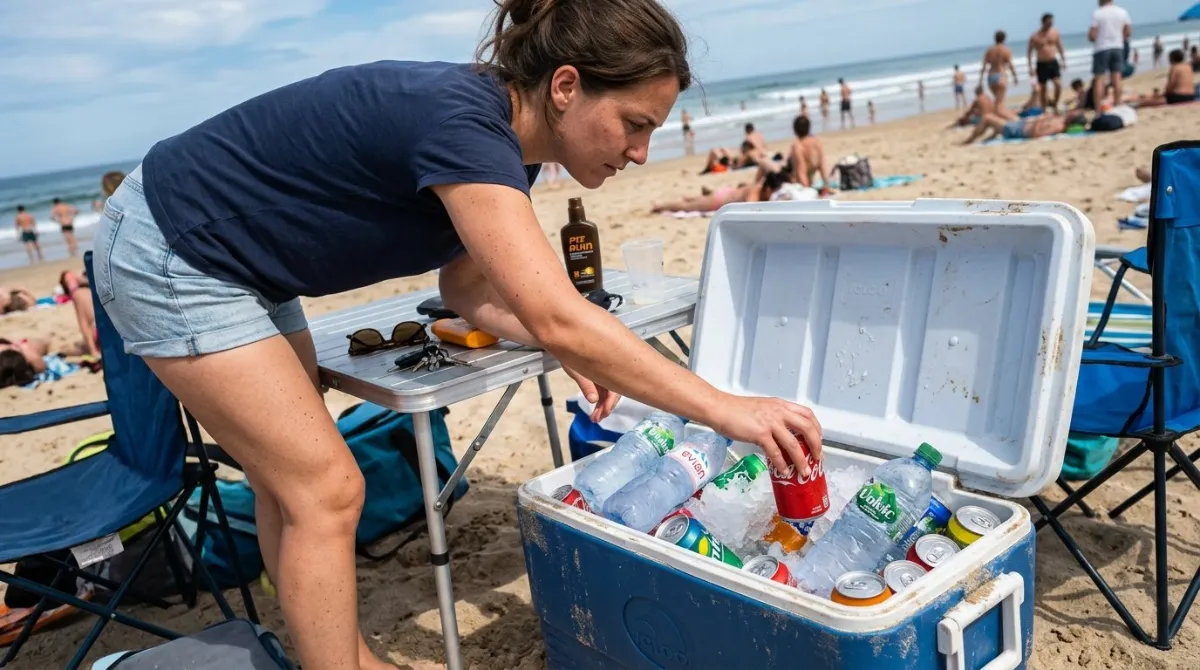
Why 85 kilometres inland changes the experience
Your body cools itself by evaporating sweat off your skin. When the surrounding air is already close to saturated, that stops working properly — which is why a humid 35°C is harder to be in than a dry 42°C.
Abu Dhabi city sits on the water, and in July and August the coastal humidity can climb past 80 per cent. An evening at a seafront restaurant in that air is genuinely oppressive. Al Khatim is about 85 km inland, well away from the sea that supplies the moisture, and the air out there is markedly drier.
The result surprises most first-time summer guests: they expect the desert to be the punishing option and find it is the comfortable one. It is also why the drive earns itself in summer more than in winter. You are not just changing location, you are changing the air you are standing in.
To be clear about the limits — this makes a summer evening manageable and pleasant. It does not make it cool. 30°C at midnight in August is still 30°C.
What a summer evening actually looks like
| Stage | What is happening |
|---|---|
| 3:00–3:30 PM, pickup | The hottest part of the day — and you step from a hotel lobby into an air-conditioned vehicle |
| The drive, 50–60 minutes | Behind glass on the E22. The outside temperature is irrelevant to you |
| Arrival and dune bashing | Sun getting low, air moving through the vehicle, cool between runs |
| The sunset stop | Between 6:11 PM and 7:15 PM depending on the month — the turn of the evening |
| Camp: camel, sandboarding, henna, costume | Temperature falling steadily now |
| Dinner and the shows | Heading toward the overnight low, in dry inland air |
| The drive back | Air conditioning again |
There is no point in a summer safari where you are standing in 43°C. The trip is built around avoiding exactly that.
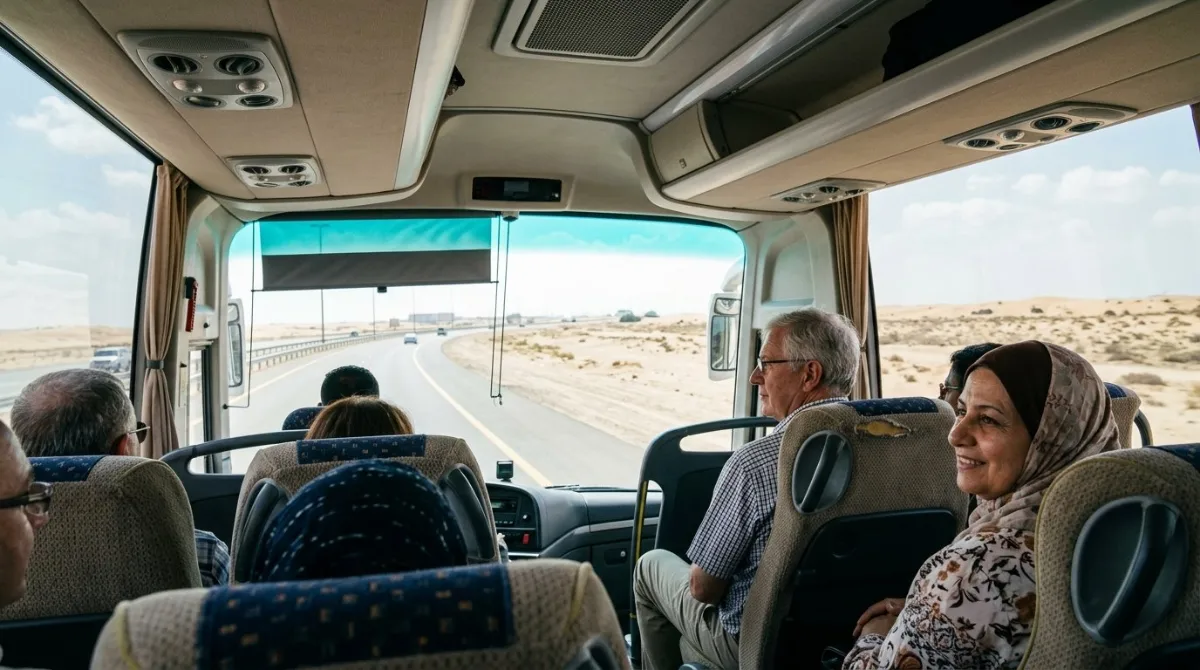
The one mistake people make in summer
It is not the clothing and it is not the timing. It is water, and specifically when you drink it.
Guests rarely get dehydrated at the camp — water, soft drinks and tea are unlimited and sitting right in front of them. What happens is that people spend a hot summer afternoon in the city doing something else, drink nothing, get into a vehicle at three, and arrive at the dunes already behind. The flatness that follows gets blamed on the heat when most of it was the water.
Start in the afternoon, before pickup. Carry a bottle for the drive. Small and often once you are there. That is the whole of it, and it makes more difference to a summer evening than anything else on this page.
What to wear between May and September
| Item | Why |
|---|---|
| Loose cotton or linen | Air has to move across your skin for sweat to work |
| Light colours | A real difference at pickup time |
| Nothing warm at all | The overnight lows are 24.6°C to 30.2°C. A layer is dead weight |
| Long trousers if you are riding | Camel and quad saddles, in any month |
| Closed shoes and socks | The sand surface holds heat long after sunset in summer |
| Hat, sunglasses, high-factor sunscreen | The sun at three in the afternoon is at its strongest |
| A shemagh or light scarf | For the shamal wind and the fine dust it carries |
| Your own water bottle | For the drive out |
| A change of shirt in the car | Optional, and appreciated on the way home in August |
The full year-round version is on the what to wear guide.
What summer takes away
Two things, and we would rather name them than have you discover them.
The horizon goes soft. The shamal wind runs from roughly late May to mid-August, lifting fine dust across the region. It is haze rather than a storm, and it almost never stops a safari, but it does mean distant ridgelines lose their edge. If you are coming to photograph the landscape, October to March is your window and summer is not.
The stars arrive late. In June full darkness does not come until well after eight thirty, by which point younger children are usually asleep. Summer haze also thins the sky. Stargazing is a winter pleasure here, whatever the season.
Neither of these makes summer a bad time to go. They make it a different trip, and knowing which one you are booking is the point of this page.
What a summer safari costs
There is no summer discount, in the same way there is no winter surcharge. Every package costs the same in August as in February. What summer gives you instead is room — often the whole ridge to yourselves.
| How you travel | Price | Unit |
|---|---|---|
| Self-drive to the camp | AED 35 | per person |
| Shared bus from Al Wahda or Mazyad Mall | AED 50 | per person |
| Hotel pickup, shared vehicle | AED 100 | per person |
| Private car, up to seven guests | AED 599 | per car |
| Private Land Cruiser | AED 800 | per car |
| Morning safari, private | AED 799 | per car |
Add-ons at the camp: quad bike AED 100 single or 150 double, VIP majlis seating AED 50 per person, long camel ride AED 300, falcon photo AED 30, extra dune bashing AED 150 per vehicle.
No deposit and no card details. You pay on arrival, cash or card, and you can cancel free up to twenty-four hours before pickup.
Who summer suits, and who should wait
Book a summer safari if you are already in Abu Dhabi and want an evening better than the one the city is offering; if you want empty dunes and same-day availability; if humid coastal evenings have worn you down; if you want the longest golden hour of the year; or if your trip dates are fixed and you would rather do it properly than not at all.
Wait for the cooler months if you want a genuinely cool evening rather than a manageable one; if you are photographing the landscape; if the night sky is the reason you are going; if you want to spend any part of the daytime outdoors; or if anyone in your group has a heart or breathing condition that heat makes worse — in which case talk to us before booking rather than after.
Summer questions we get on WhatsApp
Does the desert safari run in summer?
Every day, all summer. Nothing closes. Pickup stays at 3:00 to 3:30 PM, the dune drive, camel ride, sandboarding, BBQ buffet and live shows all run, and the camp is open exactly as it is in January.
Is a summer desert safari in Abu Dhabi worth it?
For an evening trip, yes. The camps are close to empty, the sunsets are the latest of the year, there is no rain risk at all, and the inland desert is considerably drier than the coast. What summer will not give you is a cool evening or a sharp long-distance photograph.
How hot is it at the camp in summer?
The overnight lows average 24.6°C in May, 26.9°C in June, 29.7°C in July, 30.2°C in August and 27.4°C in September. You are at the camp while the temperature is falling toward those numbers, not at the daytime peak.
Is the desert hotter than Abu Dhabi city in summer?
It reads hotter and often feels easier, because it is much drier. Coastal humidity in July and August can push past 80 per cent, while the camp sits about 85 km inland away from the sea that supplies the moisture. Sweat evaporates out there, which is the whole mechanism your body uses to cool itself.
What should I wear on a summer desert safari?
Loose, light-coloured cotton or linen, closed shoes and socks, a hat and high-factor sunscreen for the pickup, and nothing warm at all. There is no cold to plan for between May and September.
How much water do I need?
Start drinking in the afternoon before pickup rather than waiting until the camp. Water, soft drinks and tea are unlimited and included all evening; the gap is the drive out, which is when nobody thinks to drink.
Are the shows and buffet the same in summer?
Identical. The dune bashing, camel ride, sandboarding, henna, costume corner, sheesha, belly dance, tanoura, fire show and full BBQ buffet all run every summer evening. Live shows follow the Ramadan and religious-holiday schedule whenever those fall.
Is summer cheaper?
No, and nor is winter more expensive. The price is the same in every month of the year. What summer gives you instead of a discount is space — empty dunes and same-day availability.
Which summer month is best?
May for comfort, since it has the driest air and the coolest nights of the five. June for the latest sunset and the emptiest camp. September if you can wait, because the last week of it is already turning toward autumn.
Can I do a morning safari in summer?
Only as a dawn trip. The private morning drive at AED 799 per car works well if you start at first light and finish before mid-morning — it is the one comfortable daylight hour of a summer day. Anything later is not something we will sell you.
Tell us your summer date and we will be honest about it
Send the date, the package and how many of you there are. A real person replies, usually within a few minutes. If summer is the wrong season for what you want, we will tell you rather than take the booking.
Al Khatim Desert · Abu Dhabi | Pay on arrival · Free cancellation · No deposit