
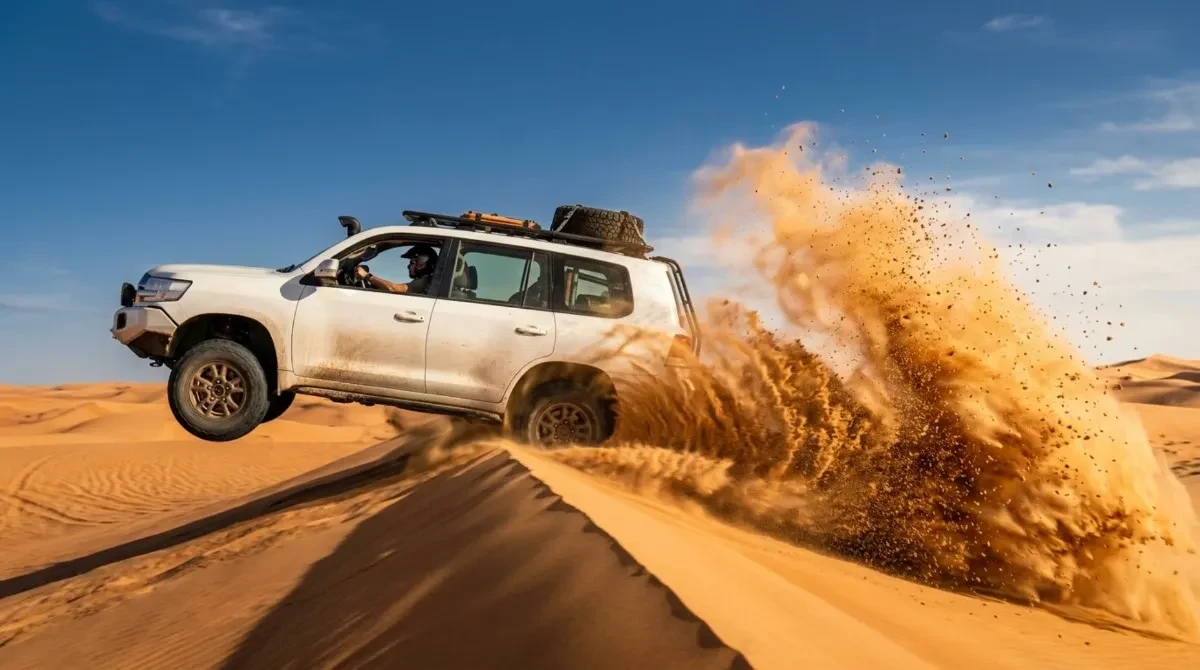
Dune Bashing Abu Dhabi
Thirty to forty-five minutes across the ridges in a roll-caged Land Cruiser with a driver who does this every day — and who will take it as gently or as hard as you ask.
- 30–45 minutes
- From age 3
- Roll cage and belts
- Morning or evening
- Intensity is your call
Seven things worth understanding first
Dune bashing is the part of a desert safari people are most excited and most nervous about, usually at the same time. Here is what is really happening in that vehicle.
The vehicle
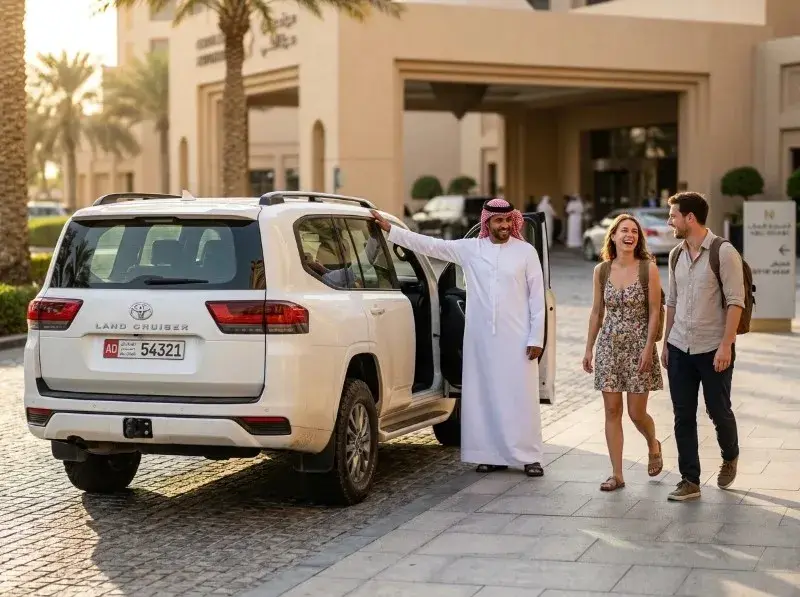
A Toyota Land Cruiser with a full internal roll cage, four-point belts in the rear, sand tyres and a suspension setup built for this rather than for the school run. Every car is checked before it goes out.
Airing down
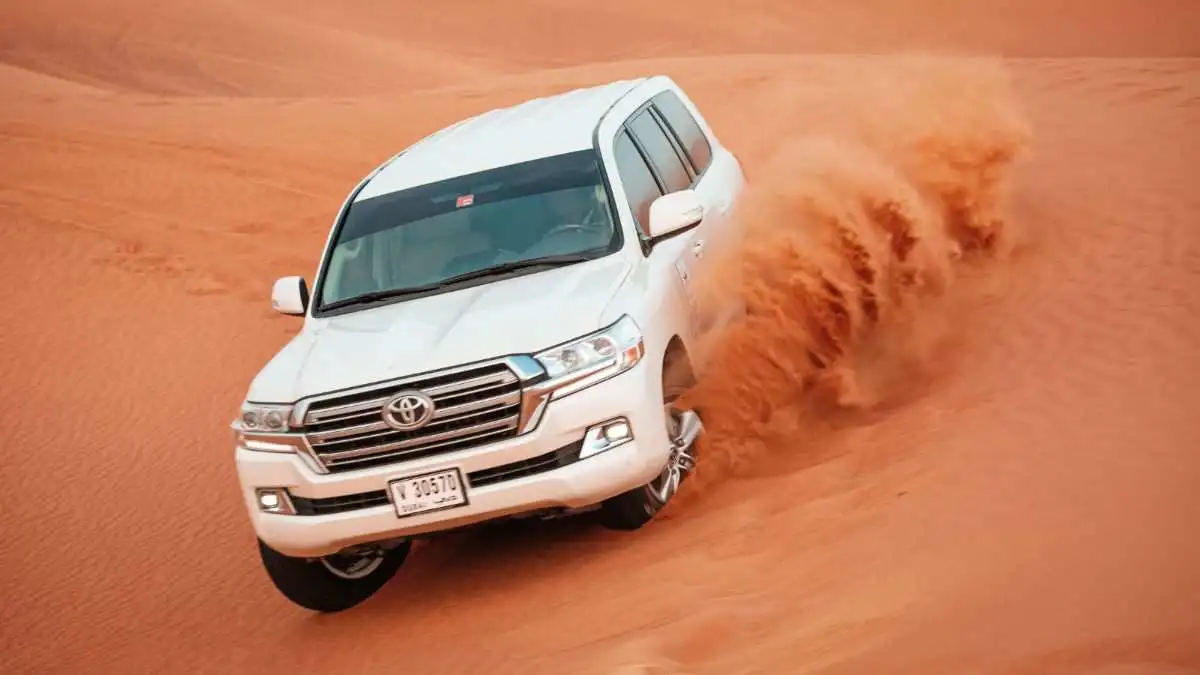
Before the first dune the tyres come down from about 35 psi to somewhere near 15. That widens the contact patch so the car floats over soft sand instead of digging into it. It takes five minutes and it is the single thing that makes the whole activity possible.
Reading the dune
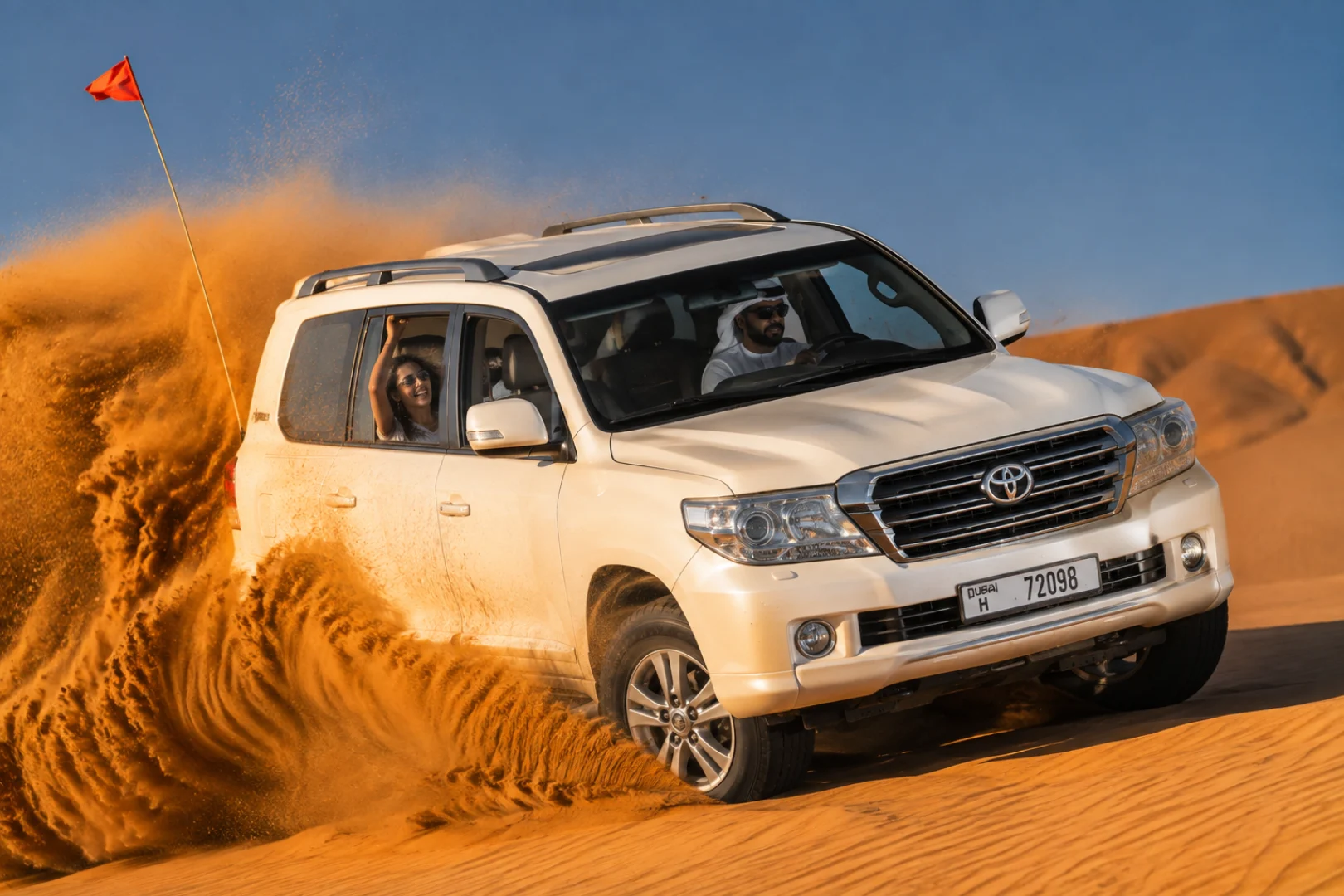
The skill is in knowing which face is firm and which is slip-face, where the crest is soft and how much speed a slope needs. Our drivers work the same twenty square kilometres every day and they can tell from the colour of the sand.
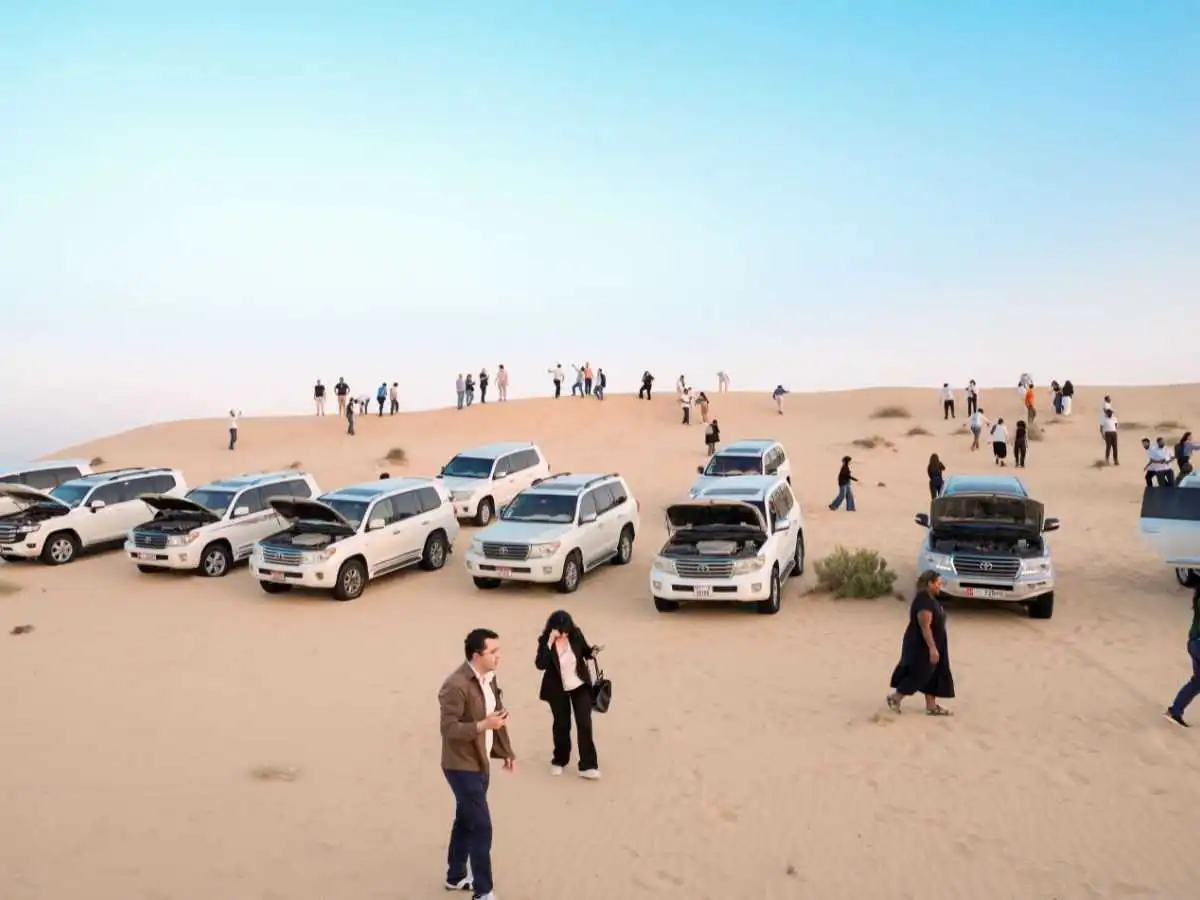
Side slopes and crests
The part people remember is the side slope, where the car runs along a face at an angle that feels far steeper from inside than it is. Then the drop off a crest, which is the bit that produces the noise everyone makes.
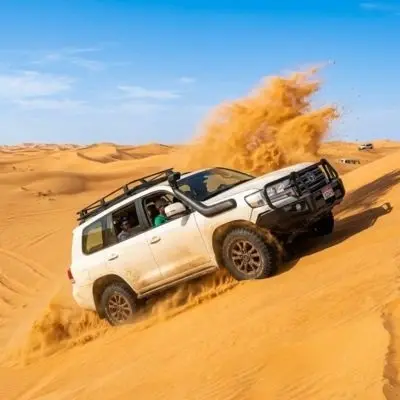
Morning against evening
Cold overnight sand is firmer and the car holds a line on it. Afternoon sand is loose and hot and slides more. Drivers who work both shifts almost all prefer the morning drive, and passengers who are nervous should book it.
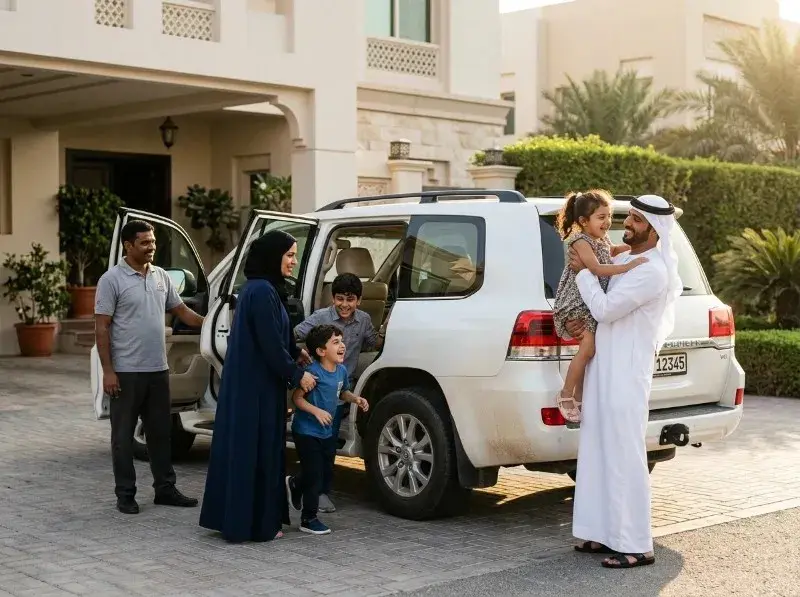
You set the level
This is the part most operators do not say out loud. Tell the driver you want it gentle and it will be gentle. Tell him you want to stop and he will stop. Nobody is trying to frighten you into a review.
Is dune bashing safe?
Short answer: yes, when it is done properly, and the things that make it safe are all checkable. Here is what to look for — with us or with anyone else.
The car
A vehicle used for dune bashing should have an internal roll cage, not just factory pillars. Ours do. Rear seats have proper belts and the driver checks every one before the first dune rather than assuming. Sand tyres, not road tyres, and a suspension setup that expects this. If an operator puts you in an unmodified showroom 4×4 and drives it hard on dunes, walk away.
The driver
This matters more than the car. Dune driving is a specific skill: reading which face is firm and which is a slip face, knowing where a crest turns soft, judging how much momentum a slope needs and when to abort a line. Our drivers work the same stretch of Al Khatim every day and most have been doing it for years. It is why the drive feels controlled rather than lucky.
Airing down
Tyres come down from roughly 35 psi to around 15 before the first dune, which widens the contact patch so the car floats rather than digs. A driver who does not stop to air down is either not going onto real dunes or is about to get stuck. It takes five minutes and you will see it happen.
Never alone
Cars run in convoy or at least in radio contact. If one gets bogged — which happens, and is normal — another pulls it out in a few minutes. A single vehicle alone on soft sand after dark is the situation to avoid, and it is why independent desert camping in the UAE needs recovery gear and a second car.
Who should sit it out
We would rather tell you now than at the edge of the sand. Pregnant guests should not do the dune drive. Neither should anyone with a heart condition, a back or neck problem, or recent surgery. Children under three should not, and there is no seat that makes it appropriate for an infant. Everyone in these groups is welcome at the camp — the ground there is flat, the drive in can be taken on the graded track, and every other part of the evening is open to them.
Motion sickness
Perfectly common and easy to manage. Sit in the front if you are prone to it, eat something light beforehand rather than nothing at all, and take a tablet an hour before pickup if you normally would on a boat. Then tell the driver. He will smooth the drive out and it usually solves the problem entirely. The morning safari, on firmer sand, is also noticeably kinder than the afternoon one.
How to get dune bashing on its own
Dune bashing is not sold as a standalone product in Abu Dhabi, by us or by anybody else, and it is worth explaining why. The dunes at Al Khatim are fifty minutes from the city. Sending a Land Cruiser and a driver out there for a forty-minute drive and straight back does not work for anyone — the fuel and the hours cost more than the drive is worth, and you would spend two hours in a car for forty minutes on sand.
So dune bashing comes attached to a safari, and every one of our packages includes it:
- AED 35 — self-drive evening safari, dune bashing from the camp
- AED 50 — shared bus, transfer to a 4×4 at the dunes
- AED 100 — shared Land Cruiser with hotel pickup
- AED 250 — evening safari with VIP seating and a quad
- AED 599 — private car, up to seven, you set the intensity
- AED 799 — private morning safari, the better sand
- AED 999 — private sunrise, firmest sand of the day
If the dune drive is the only part you want
Book the self-drive evening safari at AED 35 and treat the camp as optional. You drive yourself to the camp, do the dune drive from there, eat if you feel like it and leave when you want. It is the cheapest route to a proper dune drive anywhere in Abu Dhabi.
If you want a lot of it
Add the long dune bashing extra at AED 150. That is roughly thirty minutes more in a private Land Cruiser, away from the group, on a route the driver picks for the drive rather than for the camp. Guests who came specifically for this are the ones who book it, and they are almost never disappointed.
If you want to drive yourself on the dunes
We do not offer that and we would advise against arranging it casually. Driving on soft sand without experience is how vehicles end up buried to the axles, and recovery in the middle of Al Khatim is not a five-minute job. Quad bikes and dune buggies are the sensible way to drive something yourself out there — both are available, both are on a marked area, and both are priced below.
Add-ons, priced in advance
| Add-on | What it is | Price |
|---|---|---|
| Long dune bashing | About 30 minutes more, private Land Cruiser, up to six | AED 150 |
| Quad bike, single | Drive it yourself on the marked track | AED 100 |
| Quad bike, double | Two riders, at the camp | AED 150 |
| Dune buggy | Two-seater, open frame, roll cage | AED 800 |
| Sandboarding | Included in every package | free |
| Professional photography | Cameraman on the dunes | AED 50–150 |
Every one of these prices is published here and is the number you will be asked for at the camp. Nothing is invented on the sand.
Al Khatim, and why the sand matters
All our dune driving happens at Al Khatim, roughly fifty minutes inland from Abu Dhabi city off the Al Ain road. It is a long linear dune system on a wide flat plain, formed by wind that has blown from broadly the same direction for a very long time.
Long ridges instead of short steep bowls
That geology is why the drive here feels different to the Lahbab red dunes outside Dubai. Lahbab is a steeper, more compact dune field, which produces short sharp climbs and drops. Al Khatim gives you long ridges you can run along, which means a more sustained ride and considerably more time actually moving rather than climbing and stopping.
Fewer cars on the same sand
On a busy winter evening the Dubai dune belt carries several hundred vehicles. Al Khatim carries a fraction of that. It means the ridges are not already churned up when you arrive, and it means the driver has room to pick a line rather than queue for one.
Gold sand, not red
The colour difference is iron oxide content. Lahbab sand is rich in it and oxidises red; Al Khatim carries much less and stays pale gold. For photographs the gold sand holds shadow detail that red sand loses, particularly in low light.
Fifty minutes, not two hours
If you are staying in Abu Dhabi and book a safari that runs to the Dubai dunes, you are looking at two hours each way. Al Khatim is under an hour. That is two hours of your evening back, which matters more than most people expect until they have done both.
Dune bashing Abu Dhabi — FAQ
How much does dune bashing cost in Abu Dhabi?
It is included in every desert safari package we run, so the cheapest route to it is the self-drive evening safari at AED 35 per person. A shared Land Cruiser with hotel pickup is AED 100, and a private car for up to seven is AED 599.
Can I book dune bashing on its own?
Not as a standalone product, because the dunes are fifty minutes from the city and a car and driver going out for a forty-minute drive does not work for anyone. Book the self-drive safari at AED 35 and treat the camp as optional — that is the closest thing to dune bashing alone.
How long does the dune bashing last?
Thirty to forty-five minutes across the ridges on a standard package. A long dune drive of roughly thirty minutes more in a private Land Cruiser can be added for AED 150.
Is dune bashing safe?
Yes, when the car has a roll cage and proper belts, the driver knows the dune field, and the tyres are aired down before the first dune. All three apply to every vehicle we run. Cars also travel in convoy or radio contact so a bogged vehicle is pulled out in minutes.
Is it safe for children?
From age three. Families do it every day. The intensity is entirely up to you — say the word and the driver takes it gently or skips the dunes and drives straight to camp. Under-threes should not do the dune drive.
Can older guests do it?
Many do. But anyone with a heart condition, a back or neck problem or recent surgery should sit the dune drive out, as should pregnant guests. The camp itself is flat and everything else is open to them.
Will I feel sick?
Some people do, and it is easy to manage. Sit in the front, eat something light beforehand, take a tablet an hour before if you normally would on a boat, and tell the driver. He will smooth the drive out. Morning safaris are noticeably kinder than afternoon ones.
Is dune bashing better in the morning or the evening?
Morning, if you are asking about the driving itself. Overnight cooling packs the sand firmer so the car holds a line instead of sliding, and the dunes are unmarked. Evening gets you the sunset and the shows.
What vehicle do you use?
Toyota Land Cruisers with internal roll cages, four-point rear belts, sand tyres and suspension set up for dune work. Every car is checked before it goes out.
Why do they let the tyres down?
Dropping from about 35 psi to around 15 widens the tyre contact patch so the car floats over soft sand instead of digging in. It is the single thing that makes dune driving possible, and it takes about five minutes at the edge of the sand.
Can I drive on the dunes myself?
Not one of our Land Cruisers, and we would advise against arranging it casually anywhere — soft sand buries inexperienced drivers quickly and recovery out there is not quick. Quad bikes from AED 100 and dune buggies at AED 800 are the sensible way to drive something yourself.
Where does the dune bashing take place?
The Al Khatim dunes, about fifty minutes inland from Abu Dhabi city. Long linear ridges, pale gold sand and far fewer vehicles than the Dubai dune belt.
What should I wear and bring?
Closed shoes, light loose clothes, sunglasses. Leave loose items in the bag rather than on your lap, and take your phone out of a shirt pocket before the drive starts. A jacket from October to March.
Do I pay in advance?
No deposit, no card details, nothing online. You pay cash or card at the camp, and cancellation is free up to 24 hours before pickup.
Which safari do you want it with?
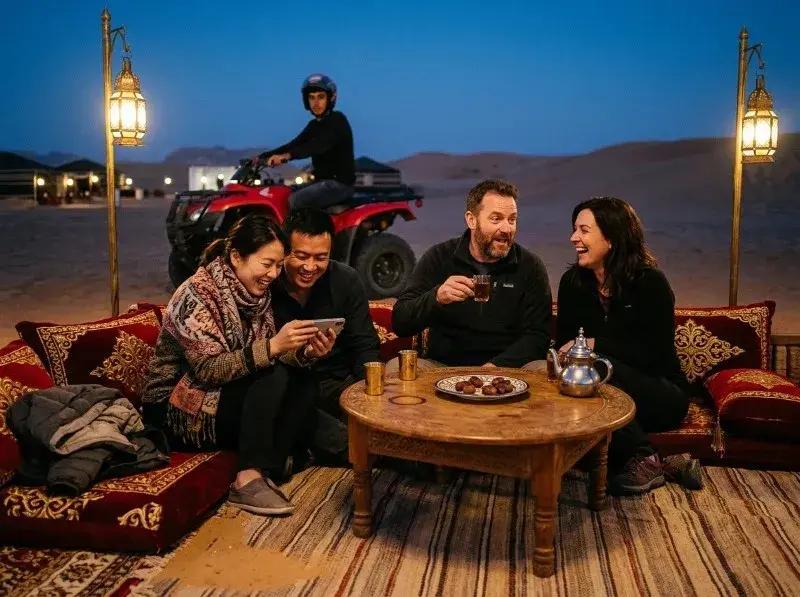
Evening Desert Safari
Dune bashing at sunset, then live shows and the BBQ buffet.
from AED 35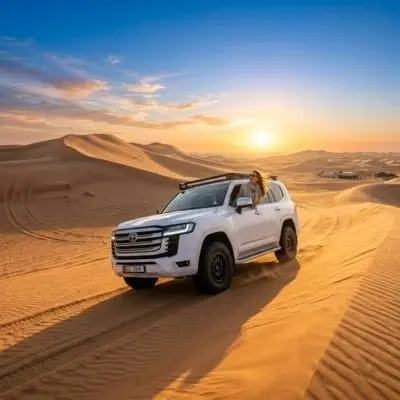
Morning Desert Safari
Firmer sand, unmarked dunes, and the better drive of the two.
AED 799 per car
Overnight Desert Safari
The evening drive, then the fire, the stars and sunrise.
AED 450
Sunrise Desert Safari
Private car, firmest sand of the day, you set the pace.
AED 999 per carDune bashing through the year
The sand behaves differently by season. Winter sand is cool, firm and easy to walk back up; summer sand holds heat long after sunset. Wind matters too — the shamal runs from late May to mid-August. Month by month on the best time to go page. Every activity at the camp, and what each one costs, is set out on the desert activities page. And if you would rather have the evening without the drive at all, the camp-only page covers the free skip.The vehicles we use
Tell us how hard you want it
Gentle enough for grandparents or hard enough that somebody screams — both are a normal request and both are fine. Send us your date and we will sort the rest. Nothing to pay until you arrive.
Al Khatim Desert · Abu Dhabi | Roll cage & belts · Pay on arrival · Free cancellation 24h