
Etiquette in Abu Dhabi: The Short List That Actually Matters
Most etiquette articles are fifty rules of padding around eight that count. Here are the eight — dress, photos, alcohol, Ramadan, and the coffee you should never refuse — without the lecture.
- 8 rules that count
- Shorts fine, mosques not
- Right hand for giving
Abu Dhabi is an easy city to be polite in: cosmopolitan, patient with visitors, and clear about its few real lines. The genuinely useful etiquette list is short — and knowing it converts you from tolerated tourist to welcome guest, which in this culture is a promotion with benefits.
Eight rules, the reasons behind them, and the camp-specific courtesies at the end.
Four lines the city actually draws
1. Affection stays modest in public — hand-holding passes, performances do not.
2. Alcohol lives in licensed venues — hotels and their restaurants, never streets, cars or the desert camp. Public drunkenness is the visitor offence that actually gets prosecuted; the alcohol page has the safari half.
3. Cameras ask first — people, women and families above all; government and military sites never.
4. Gestures and swearing carry legal weight here — the traffic argument you would have at home, do not have here.
Casual almost everywhere, covered where it counts
The city’s default is relaxed: ordinary casual clothing everywhere touristic — malls, restaurants, the Corniche, and yes the safari, where shorts are fine.
The exceptions are specific: shoulders and knees covered for mosques and government buildings, a headscarf for women at the Grand Mosque, and swimwear strictly for beach and pool.
The scarf trick from our packing list applies: one light scarf covers the mosque, the dune wind and the camp’s evening chill in a single item.
Daylight courtesy, evening celebration
Visiting during Ramadan asks one adjustment: eat, drink and smoke indoors during daylight — hotels and many restaurants serve normally behind screens — and dress a notch more modestly.
In exchange you get the city at its warmest: iftar spreads, late sociable evenings, and a desert safari timed to break the fast on the sand.
Around daily prayer times the only etiquette is patience — a shop pausing briefly is life working properly, and the prayer page covers the camp’s arrangements.
Take the coffee. Sit anywhere. Ask the camel’s handler.
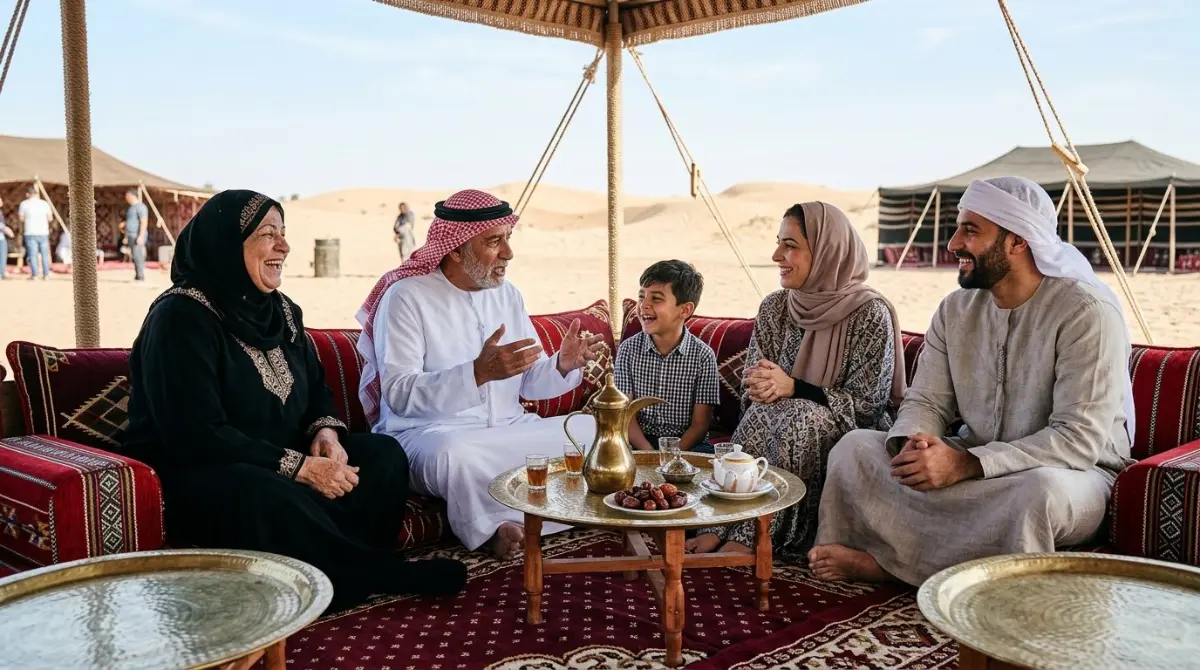
The camp runs on the region’s hospitality grammar, and joining it is easy: accept the gahwa and dates at the gate (right hand, small sips, a gentle wiggle of the cup means “enough”), sit freely on the majlis carpets, and photograph performers happily — they are performing.
Ask before touching the falcon or mounting anything, tip if moved but never under pressure (the tipping page), and leave the sand as you found it.
Do that much and you will be treated less like a customer and more like a guest — which is the whole cultural transaction, working as designed.
Etiquette — your questions
What should tourists not do in Abu Dhabi?
The short list: public drunkenness, aggressive public displays of affection, photographing people – especially women and families – without asking, rude gestures and public swearing, and disrespect around mosques and Ramadan daytime. None of it is exotic; it is courtesy with local weight.
What is the dress code in Abu Dhabi?
Relaxed in most places: ordinary casual clothes are fine in malls, restaurants and on the safari – shorts included. Cover shoulders and knees for mosques and government buildings, with a headscarf for women at the Grand Mosque.
Can tourists drink alcohol in Abu Dhabi?
In licensed venues – hotels, some restaurants – yes. Not in public places, not in cars, and not at the desert camp, which holds no licence. Drunk in public is where visitors actually get into trouble.
How should I behave during Ramadan?
Eat, drink and smoke indoors during daylight out of courtesy, dress a notch more modestly, and enjoy the evenings – the city is at its most sociable after sunset. Our Ramadan page covers the safari specifics.
Is it okay to photograph locals?
Ask first, always – women and families especially. Government buildings, military sites and some ports are no-photo zones. Performers at shows expect cameras; strangers at prayer do not.
What courtesies do locals appreciate?
Accepting coffee and dates when offered, using the right hand for giving and receiving, standing for elders, and a few words of Arabic – salaam alaikum and shukran carry more goodwill than perfect pronunciation would.
Read next
The venue-specific versions: the Grand Mosque, Ramadan safaris, alcohol rules and the ladies’ guide. The camp’s traditions on the Bedouin camp page.
Come as a guest — the culture does the rest
Any etiquette question we have not covered, ask it on WhatsApp before the trip – it is what the line is for. The coffee will be poured either way.