
Guide · 45 km east of the city
Al Wathba Fossil Dunes
They are not fossils, nobody agrees how old they are, and at the time of writing the site is closed for development. Every one of those things is missing from the pages currently ranking for this, so here they are first.
- Free entry
- ~45 km, 40–50 min
- 1,700+ formations
- Protected since Feb 2022
- Check it is open before you go
We do not run tours here — it is a protected area with no vehicles allowed. This is a guide, not a product.
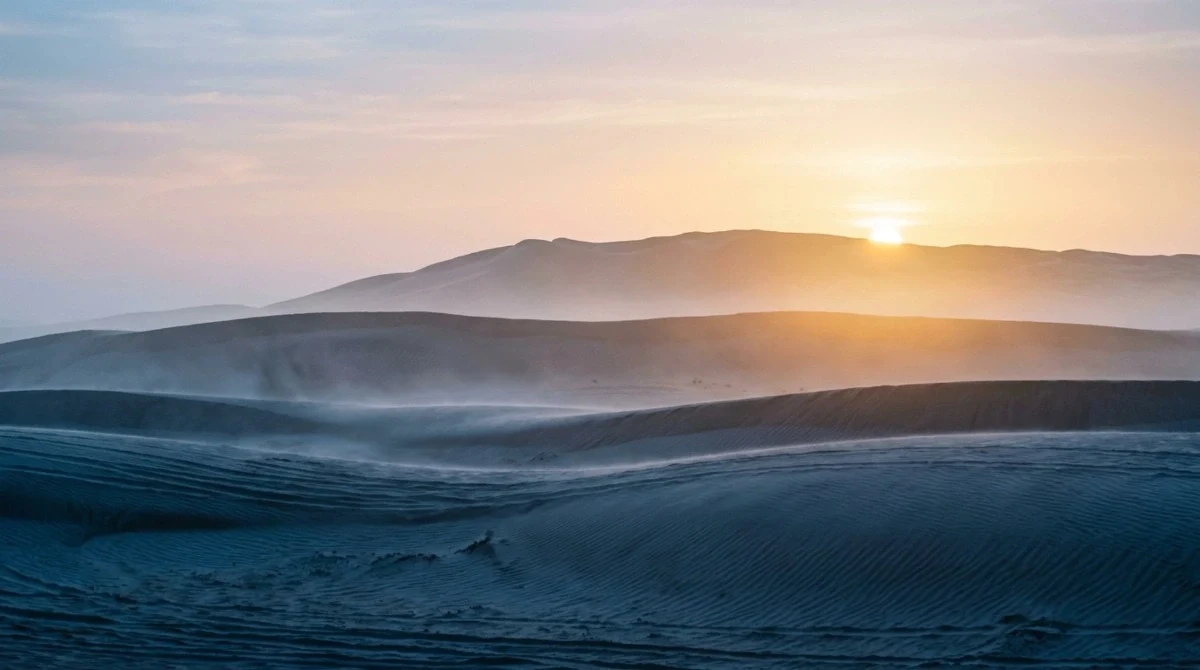
Before you drive out there
The Environment Agency – Abu Dhabi has listed Al Wathba Fossil Dunes as temporarily closed for development until further notice. The closure was announced in late 2023 and, as of writing, has not been lifted.
Several tourism pages — including official-looking ones — still describe the site as operating with normal opening hours. Check the Environment Agency’s own page before you make the drive. We will update this page when it reopens.
The name
They contain no fossils
The name is a nickname and a misleading one. There are no bones, shells or organic remains in these formations. What happened is geological, not biological.
Wind piled up sand. Groundwater carrying dissolved calcium carbonate moved through it and cemented the grains together into soft rock. Then the wind kept working, stripping away the loose sand around the cemented cores and leaving what is left standing — mushroom stalks, pedestals, fins and arches, sculpted by the same wind that built them.
So they are fossilised dunes in the sense that a dune has been turned to stone. They are not fossils.
Disputed
120,000 years old, or four million?
You will find both figures published by credible sources, and no page anywhere flags the contradiction. We are not going to quietly pick one.
| Figure | Where it comes from | What it probably measures |
|---|---|---|
| ~120,000 years | Press reporting at the time the site was protected | Likely the age of the cementation — when the sand became rock |
| Over 4 million years | Environment Agency – Abu Dhabi | Likely the age of the sand grains themselves, which are far older than the structure they sit in |
Both can be true at once and mean different things, which is the likeliest explanation. If you want a number to say out loud, “the formations are tens of thousands of years old and the sand in them is much older” is defensible and honest.
Visiting
What is there, and what it costs
- FreeThere has never been an entry fee.
- WhereAbout 45 km east of Abu Dhabi city, roughly 40 to 50 minutes on sealed road. No 4×4 needed.
- SizeA protected area of about 7 km² holding more than 1,700 formations, fenced with around 7 km of boundary.
- FacilitiesWhen open: a visitor centre with a gallery, roughly 3 km of lit walking trails, benches and shade, an amphitheatre, food trucks, free parking and toilets.
- HoursWhen open: 08:00 to 22:00 Monday to Thursday, and to 23:00 Friday to Sunday and on holidays.
- ProtectedDeclared a protected area on 2 February 2022.
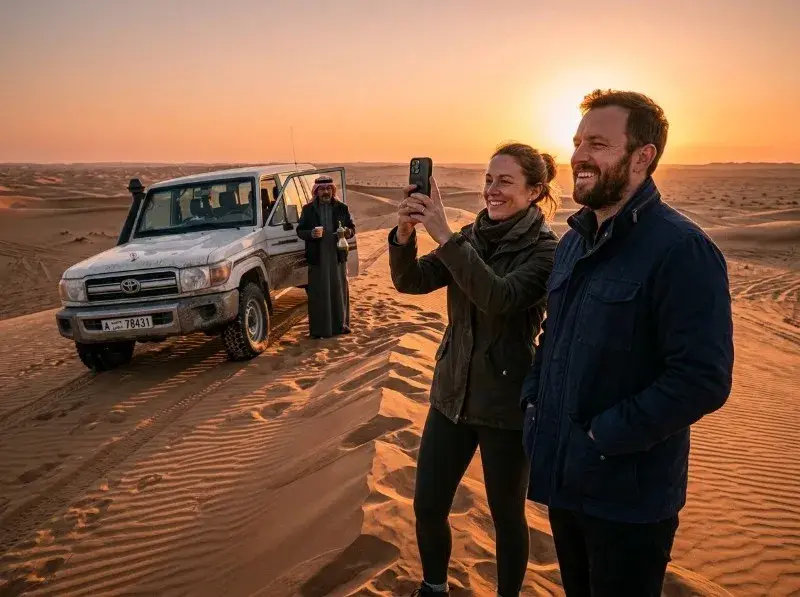
Climb on them
This is the rule people break most. These formations are thin cemented sand on narrow stems — they were never built to hold a person’s weight and they do collapse. Once one is gone it does not grow back in your lifetime.
Drive on the site
It is a fenced protected area with designated paths. No vehicles, no quad bikes, no off-roading. Some operator blogs still list it as a riding spot — they are wrong.
Drones
UAE drone rules require registration and there are additional restrictions in protected areas that are not clearly published. Contact the Environment Agency rather than assuming.
Late afternoon and after dark
Low sun rakes across the formations and gives them shape; at midday they look flat. When the site is open the evening lighting makes it a genuinely unusual photographic subject.
Honest verdict
Is it worth going?
Yes, for an hour or ninety minutes, if you like geology or photography and you are already heading east. No, if you are expecting a half-day attraction.
You will enjoy it if…
- You find landscape and geology genuinely interesting
- You photograph, and you go at golden hour
- You want somewhere free, quiet and completely unlike the city
- You are combining it with the salt lake nearby
You will be disappointed if…
- You want activities — there are none, by design
- You go at midday, when the light kills it
- You expect it to be like a desert safari — it is the opposite
- You did not check whether it is open
Reviewers who did not enjoy it almost always say the same thing: “there was nothing to do.” That is accurate. It is a place to walk and look, not a place to do things. If you want the doing, that is an hour further out.
FAQs
Fossil Dunes — your questions
Is Al Wathba Fossil Dunes open?
At the time of writing, no — the Environment Agency lists it as temporarily closed for development until further notice, announced in late 2023. Several tourism pages still say otherwise. Check the agency’s own page before you drive out.
Are they actually fossils?
No. There are no bones, shells or organic remains. Sand was cemented into soft rock by calcium carbonate carried in groundwater, and then wind stripped away the loose sand around it. Fossilised dunes, not fossils.
How old are they?
Sources disagree. Around 120,000 years appears in press reporting; the Environment Agency says over four million. The likeliest explanation is that one figure is the age of the cementation and the other the age of the sand grains. We would rather show you both than pick one.
How much does it cost?
Nothing. Entry has always been free.
How far is it from Abu Dhabi?
About 45 km east of the city, 40 to 50 minutes on sealed road. A normal car is fine.
Can I climb on the formations?
No, and this is the rule most often broken. They are thin cemented sand on narrow stems, they were never built to take weight, and they collapse. Once one is gone it is gone.
Can I drive or quad bike there?
No. It is a fenced protected area with designated walking paths and no vehicle access. Some operator blogs list it as a riding spot — they are simply wrong.
Can I fly a drone?
UAE drone rules require registration, and protected areas carry extra restrictions that are not clearly published. Ask the Environment Agency rather than assuming it is fine.
What is the best time of day for photos?
Late afternoon into golden hour, or after dark when the site lighting is on. At midday the light flattens the formations and they photograph badly.
Are there toilets and parking?
When the site is open, yes — free parking, toilets, a visitor centre, shaded benches and food trucks.
Is it worth visiting?
For an hour or ninety minutes, if you like geology or photography, yes. As a half-day attraction, no. There is deliberately nothing to do there beyond walking and looking.
Read next
The salt lake is twenty minutes further along the same road, which makes the two a natural half-day together. Both are best early, which is the argument for the morning safari rather than the evening one. For sand rather than stone, see the dune fields or the Abu Dhabi desert page.
Want the desert you can actually play in?
The Fossil Dunes are for looking at. An hour further out there is dune bashing, sandboarding, camels and dinner — from AED 35.
Al Wathba Salt Lake · The Al Khatim desert · All the dunes near Abu Dhabi · Evening Safari