The Animals of the Desert Safari: What You Will Meet, What You Will Not
Camels and a falcon, reliably; oryx and gazelle, honestly no — they live in reserves, not tourist camps. The truthful wildlife page, including the ethics questions guests actually ask.
- Camels & falcon at camp
- Wild sightings: rare
- Nothing is mandatory
Safari is an African word, and it smuggles in African expectations — herds at sunset, binoculars, luck. The Arabian desert plays a different game: its animals are few, nocturnal and superb at not being seen, while its camps keep two magnificent domesticated exceptions.
Here is the honest cast list: who you will meet, who you will not, and the ethics of both.
The camel line and the glove
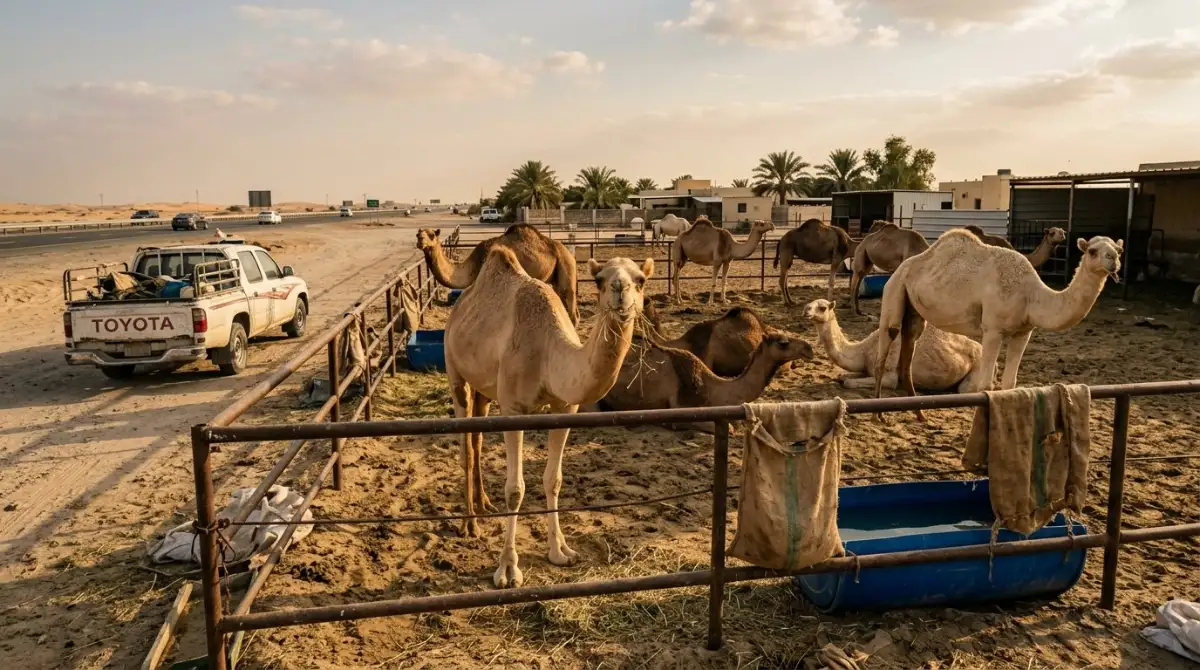
Camels are the evening’s guaranteed animal: short led rides at the camp, and farms like the one above along the drive — camel husbandry is a living industry here, with racing at its glamorous top end. The camel page covers the ride itself.
The falcon poses on its handler’s glove for photographs — the national bird of a country where falconry has its own hospitals and the birds their own passports. Two minutes with one on your arm is the closest most visitors come to the old desert’s partnership with animals.
Both encounters are included, brief, handled — and optional. Nothing at the camp requires your participation.
Tracks at dawn, and that is the truth
The wild desert’s residents — gazelle, desert foxes, hares, monitor lizards, and the reintroduced Arabian oryx — are real and almost never seen from a safari vehicle: they move at dawn and dusk and treat engines as weather to avoid.
What you will genuinely see: tracks in the morning sand (the sunrise trip’s quiet bonus), desert birds, and on lucky winter evenings a fox’s eyes at the edge of the camp light.
Any operator promising wild herds on an evening safari is decorating. We would rather set the expectation and let the desert’s emptiness make its own impression — which, at night, it very much does.
Working animals, short rides, your choice
The questions guests ask quietly, answered plainly. The camels are working animals from a four-millennia-old husbandry culture, individually known to their handlers, doing short led walks — not circus work. Ride or skip freely.
The falcon is habituated to the glove and handled by people for whom these birds are a serious, regulated tradition — not a prop plucked from the wild.
What we do not offer: animal shows beyond these two encounters, photo props with wild species, or anything that requires an animal to perform. If the camp’s two residents are not for you, the sunset does not mind.
The oryx is real — it is just not at dinner
For the guaranteed version of Arabia’s wildlife: Al Ain Zoo holds the region’s collection, oryx and gazelle included. The wild oryx — hunted to extinction and famously brought back — roams protected reserves, a national conservation story told properly on the conservation page.
Birders should know about the wetland reserves near the city in season, and everyone should know the UAE desert page for the ecosystem’s full cast.
The desert’s honest wildlife offer is not abundance — it is the astonishment that anything lives out there at all. That lands hardest at dawn, on foot, reading the night’s tracks.
Animals — your questions
What animals do you see on a desert safari?
At the camp, reliably: camels to ride and the falcon for photographs. In the wild, honestly: mostly tracks – the desert’s residents move at dawn and dusk and hide from vehicles. Camel farms along the drive are the dependable wildlife of the evening.
Are there dangerous animals in the Abu Dhabi desert?
Nothing that concerns a camp guest. Snakes and scorpions exist in the ecosystem and avoid humans, lighted camps and trodden sand; in years of nightly operations they are a non-event. Closed shoes remain sensible everywhere in a desert.
Can you ride the camels – is it ethical?
The camp’s riding camels are working animals in a culture with four thousand years of camel husbandry, handled by people who know them individually. Short led rides, no stunts. If riding is not for you, skip it – nothing is mandatory.
What is the falcon at the camp?
The national bird, on a handler’s glove for photographs – falconry is a living Emirati tradition with its own hospitals and passports for the birds. The falconry page tells that story properly.
Where can I see oryx and gazelle?
Reserves and zoos, honestly – Al Ain Zoo for the guaranteed version. Wild oryx roam protected areas, not tourist camps, and any operator promising wild herds on an evening safari is decorating.
Do camels really live wild in the desert?
The camels you pass on the drive belong to farms – camel husbandry is a serious local industry with racing at its top end. Wild herds, no; beloved and everywhere, yes.
Read next
The two residents in detail: camel rides and falconry. The bigger picture: conservation and the UAE desert. The guaranteed sightings: Al Ain.
Two magnificent animals, honestly billed
Camel and falcon included from AED 35, wild herds never promised, and everything optional. The desert’s emptiness is the real exhibit — it shows nightly.