
Guide · Every dune field, ranked
Abu Dhabi Sand Dunes: Every Field, Ranked by Drive Time
Search this and Google shows you Dubai. The red dunes everybody photographs are on the other side of the country, and Abu Dhabi’s own dune fields are barely written about. This is the map nobody publishes — five dune fields, ranked by how far you have to drive.
- Al Khatim: 45–60 min
- Sweihan: ~1 hour
- Al Wathba: ~40 min
- Liwa: 2.5–3 hours
- Red sand is in Dubai
Our camp is at Al Khatim. The rest of this page is a guide, not a sales pitch.
The map
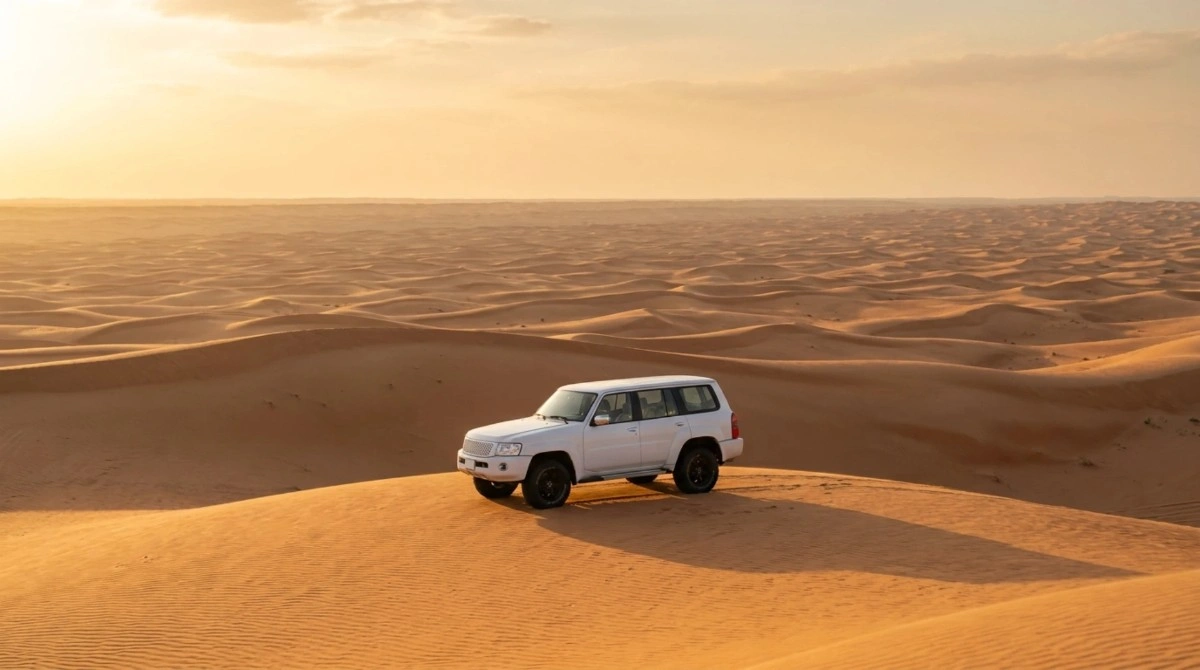
Five dune fields, ranked by drive time from the Corniche
| Where | Drive | What it is like | Who it suits |
|---|---|---|---|
| Al Wathba | ~40 min | Low dunes plus the fossil formations, the salt lake and the wetland reserve. Scenery rather than dune driving. | Photographers, walkers, anyone without a 4×4 |
| Al Khatim | 45–60 min | Rolling golden dunes, roughly 15 to 40 m. Forgiving, and where almost every Abu Dhabi safari camp sits, including ours. | Everybody. First-timers especially |
| Sweihan | ~1 hour | Taller and much softer. No marked trails, no services. Off-road clubs train here for Liwa. | Experienced self-drivers only |
| Qasr Al Sarab / Rub’ al Khali edge | ~2 hours | The true Empty Quarter margin. Large linear dunes and mega-dunes, and a resort in the middle of them. | An overnight, not an afternoon |
| Liwa & Moreeb | 2.5–3 hours | Mega-dune country. Moreeb has a face of about 50 degrees and hosts the hill-climb racing. | A full day or an overnight |
If you have one evening and want dunes, a camp and dinner, the answer is Al Khatim and it is not close. Everything else on this list is a separate trip.
The colour question
Where are the red dunes? Not here.
This trips up a lot of visitors. The famous red sand — Big Red, Al Lahbab — is in Dubai, about fifty minutes from Dubai city and roughly two hours from Abu Dhabi. Abu Dhabi’s sand is pale gold and white.
The reason is mineralogy. Red sand gets its colour from iron oxide coating the quartz grains — rust, essentially, built up over a very long time. Abu Dhabi’s dunes carry a higher fraction of carbonate sand, derived from marine shell and coral material along the coast, with less iron staining. More carbonate and less iron means paler sand.
Neither is better. Red photographs dramatically at midday; pale gold does extraordinary things in the last hour of light and holds a cleaner shadow. If red sand is specifically what you came for, drive to Lahbab — we will tell you that rather than pretend.
Reading the desert
Barchan, linear, star: what the shapes mean
Once you know the four shapes you cannot stop seeing them from the car window, and it makes the drive out considerably more interesting.
Barchan
Crescent-shaped with the horns pointing downwind. They form where sand is limited and the wind blows steadily from one direction, and they migrate — slowly, but genuinely, across open plains.
Linear or seif
Long parallel ridges running for kilometres with flat corridors between them. These are what you drive along in the interior rather than over.
Star dunes
Multiple arms radiating from a central peak, formed where the wind comes from several directions across the year. They grow upward rather than moving, which is why the biggest dunes on earth are star dunes.
Compound mega-dunes
Whole dune systems piled on top of each other. This is Liwa and the Empty Quarter, and it is why Moreeb looks the way it does.
The shamal — the northerly wind down the Gulf — is what built all of it, carrying sand inland from the coast over tens of thousands of years.
Access
Where you can go without a 4×4, and where you cannot
Tarmac and graded tracks
Sealed roads reach Al Khatim, the Al Wathba sites, Liwa town, Qasr Al Sarab and the car park at the foot of Moreeb. The graded track to our camp is fine in a saloon — that is how the AED 35 self-drive safari works.
Anything on soft sand
The moment you leave a made surface you need a proper 4×4 with tyres deflated to around 14 to 16 PSI, recovery gear, and ideally a second vehicle. This is not caution, it is the standard.
Protected areas
No vehicles at Al Wathba Fossil Dunes or the wetland reserve. No quad bikes either. Some operator blogs still list them as riding spots and they are wrong.
Go with someone who drives it daily
A shared 4×4 pickup is AED 100 a head and includes the dune bashing on the way in. It removes every question on this page.
FAQs
Abu Dhabi sand dunes — your questions
Where are the red sand dunes near Abu Dhabi?
There are not any. The red dunes — Big Red, Al Lahbab — are in Dubai, about two hours from Abu Dhabi. Abu Dhabi sand is pale gold and white.
Why is Dubai sand red and Abu Dhabi sand golden?
Iron oxide. Red sand has quartz grains coated in it, essentially rust built up over a long time. Abu Dhabi dunes carry more carbonate sand derived from marine shell and coral, with less iron staining, so they run paler.
Which desert is closest to Abu Dhabi city?
Al Wathba at around 40 minutes, though that is low dunes and protected sites rather than dune driving. For actual dunes and a camp, Al Khatim at 45 to 60 minutes.
What is the tallest dune in the UAE?
Moreeb Dune near Liwa is the famous one. It is usually quoted at 300 metres base to crest, though topographic data suggests the rise above the surrounding floor is closer to a hundred-odd metres. It holds no world record.
Can I drive to the dunes in a normal car?
To them, yes — sealed roads reach every dune field on this page, and the graded track to our camp is fine in a saloon. On to the sand, no. That needs a proper 4×4 with deflated tyres and recovery gear.
Do I need a tour or can I go alone?
You can drive yourself to the edge and to our camp. Going into the dunes alone is how people get stuck a long way from help. A shared 4×4 pickup is AED 100 a head and includes the dune bashing.
Where can I see the Empty Quarter?
The nearest genuine edge is around Qasr Al Sarab, about two hours out, and Liwa itself at two and a half to three. Neither fits into an evening.
Is Liwa worth the drive from Abu Dhabi?
If you have a full day or a night, yes — it is one of the great landscapes on earth. If you have an afternoon, no. Al Khatim gives you dunes, a camp and dinner and gets you home.
What are the different dune shapes?
Barchan are crescents with horns pointing downwind. Linear or seif dunes are long parallel ridges. Star dunes have arms radiating from a peak and grow upward. Compound mega-dunes are whole systems stacked together, which is Liwa.
Which dune field do desert safaris use?
Almost all Abu Dhabi operators, including us, use the Al Khatim and Al Khaznah belt along the Al Ain road. It is close, forgiving and has established camps.
Read next
Each dune field has a page of its own: Al Khatim where our camp sits, Sweihan for the off-road crowd, Liwa and Moreeb Dune three hours south, and the fossil dunes for something that is not sand at all. The Abu Dhabi desert page ties them together and adds the culture side of the evening.
The closest dunes are an hour away
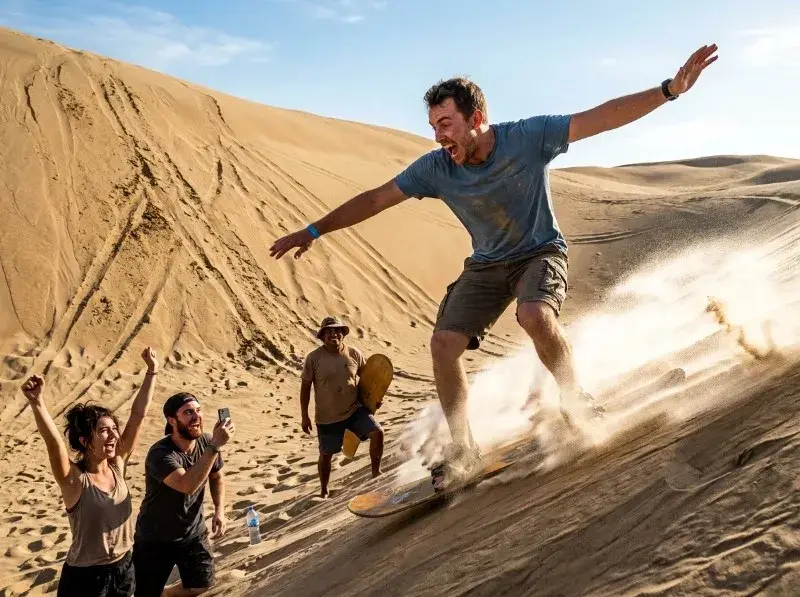
Al Khatim, from AED 35 if you drive yourself and AED 100 if we collect you. Dune bashing, camel, sandboarding, BBQ and the shows.
Al Khatim · Liwa · Sweihan · Moreeb Dune · All prices