
Desert Photography: The Five Shots, the One Hour, and the Drone Answer
The desert photographs itself if you stand in the right five places at the right one hour. Where they are, how to work them with just a phone — and the honest word on drones before you pack one.
- Golden hour rules
- 5 reliable spots
- Drones: permits only
Every guest wants the same photograph and most come home with a lesser version of it — not for lack of camera, but for standing in the wrong place at the right time or the right place at noon.
This page fixes both: the five positions that reliably produce the pictures, the hour that powers them, and the equipment answer (spoiler: your phone, wiped clean).
Forty golden minutes, twice a day
Desert light has two performances: the last ~40 minutes before sunset and the hour after dawn. Low sun rakes the ripples, every ridge gets an edge of gold and a flank of shadow, and the sand turns the colour the brochures promise.
The evening safari is built around the first performance — the sunset stop lands in it by design. The second belongs to the sunrise trip and the morning run, where the bonus is untouched sand: no footprints but the ones you make.
Midday, for the record, flattens everything — which is why no serious desert photograph is taken at lunch.
Five positions that always pay
1. The sunset stop. Walk 20 metres from the vehicles, put the sun at 45 degrees, and shoot people on the ridge line — not into the sun, not with it flat behind you.
2. The camel line against the light: silhouettes with legs — the one desert cliché that never misses.
3. The dune crest past the camp lights, blue hour: glowing camp below, darkening sand above. Most guests never walk out to it; it is the best frame on the site.
4. The fire show from a majlis seat: expose for the flame and let the night go black.
5. The costume photos — free, included, and somebody else is already holding the camera. Accept the cliché; it is the one your family actually wants.
Phone beats camera bag out here
Wipe the lens — dune dust is the desert’s real filter and it is not a good one. A cloth in the pocket outperforms a lens upgrade.
Tap to expose on the sand at golden hour and let shadows fall dark; night mode for the camp; burst for camels and sandboard runs.
Keep the phone sealed during dune bashing and shoot the stop instead — interior action footage costs more phones than it makes reels. Signal is patchy out there anyway, so post from the car: the signal page manages expectations.
Photographing people: ask first, families and women especially — ordinary courtesy with extra weight here, per the etiquette page.
The paragraph that saves you a confiscation
The question arrives weekly, so plainly: drones are tightly regulated in the UAE. Flying requires registration and permits, the desert camps and their surroundings are not tourist-flyable zones, and “nobody will notice” is a theory tested against a state that notices.
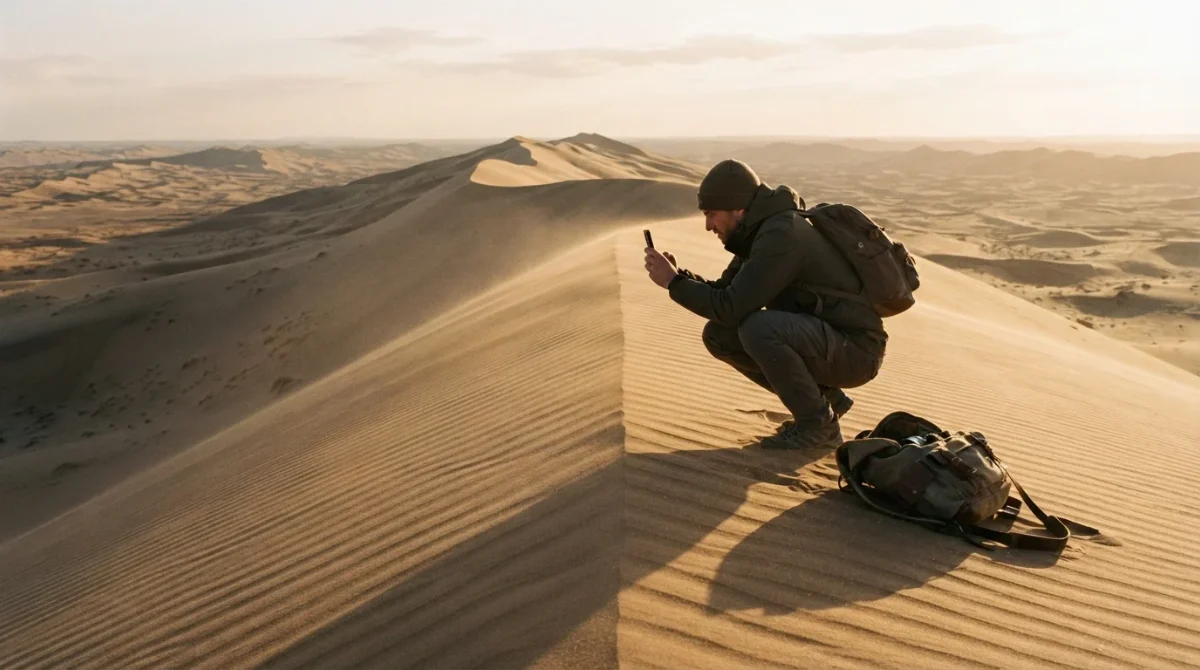
We cannot and do not arrange drone flights, and we would rather say so than let a guest pack one into trouble. The legal version of the aerial urge: the dune-crest panorama at golden hour, arms raised, phone in landscape — from the exact spot in this page’s photograph.
For the sky itself after dark, the stargazing page is the camera’s other desert.
Desert photography — your questions
Where are the best photo spots on a desert safari?
Five reliable ones: the sunset stop on the dunes, the camel line against the light, the dune crest just past the camp lights, the fire show from the majlis, and the free Arabic costume photos. Golden hour makes the first three; full dark makes the fourth.
When is the light best in the desert?
The last 40 minutes before sunset and the first hour after dawn. Midday flattens every ripple; the safari’s timing is built around the good light on purpose.
Can I fly a drone on the safari?
No – drones are tightly regulated in the UAE and cannot be flown at the camp or on the dunes without permits that tourist evenings do not get. Phone footage from the dune crest is the legal version and it is genuinely good.
Is a phone camera enough?
Yes – modern phones love the desert: huge light, clean lines, warm colour. The wins are position and timing, not equipment. Wipe the lens; sand dust is the real enemy.
Will someone take our photo?
Ask your driver at the sunset stop – they do it nightly and know the angles. The costume photos at the camp come with a person already holding the camera.
What about photographing other people?
Ask before photographing strangers, especially families and women – normal courtesy carries extra weight here. Performers during shows are fair game; the etiquette page covers the rest.
Read next
The timings that chase the light: sunrise, evening and the comparison. The courtesy side on etiquette, and the whole evening on what to expect.
Book the golden hour — the desert does the rest
Tell us the shots you want and we will say sunrise or sunset honestly. From AED 35, and the costume photographer is already included.