The Abu Dhabi Desert: The Dune Fields, and What Happens After Dark
Seven places worth knowing about and five things that happen at the camp — including an honest note on which of them are actually Emirati and which are imported entertainment.
- 8 min read
- 45–60 min from the Corniche
- Al Khatim Desert
Abu Dhabi is mostly desert. Not the thin strip of sand behind a hotel that some cities sell as one, but a real one — the northern edge of the Rub’ al Khali, running south and west until it stops being a country.
Almost none of it is where visitors expect. The city sits on an island; the dunes begin about an hour inland. This page is the map: the seven places we get asked about, what happens at the camp once the sun is down, and which parts of that evening are genuine local tradition rather than a floor show.
Where the desert actually starts
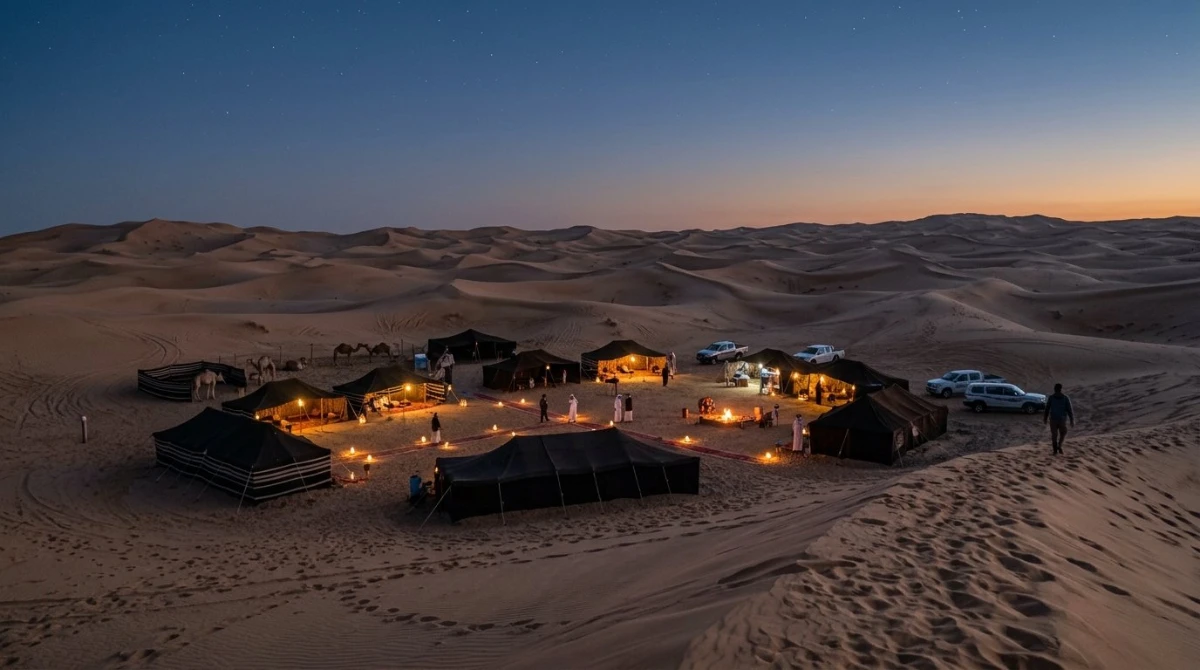
From the Corniche you drive inland for roughly forty-five minutes to an hour before the sand takes over properly. That is where our camp sits, in Al Khatim, on the Abu Dhabi–Al Ain side of the emirate.
Two things surprise people. The first is that the sand here is pale gold rather than the deep red of the photographs — those are usually shot much further south, or in a different emirate entirely. The second is how quickly it empties. Twenty minutes past the last roundabout there is nothing in any direction, which is the whole point.
If you want the dune fields compared properly — drive times, which ones need a 4×4 and which you can reach in a saloon car — that is set out on the Abu Dhabi sand dunes page. What follows is the shorter version: the seven places people ask us about, and what each one is for.
Seven places in the Abu Dhabi desert
Al Khatim Desert
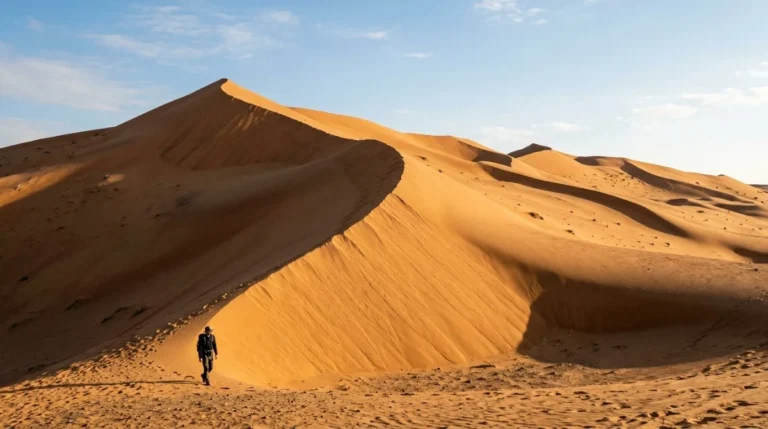
Where our camp is. Tall, clean dunes about an hour inland, quiet enough that most evenings you hear nothing but the wind.
The sand dunes
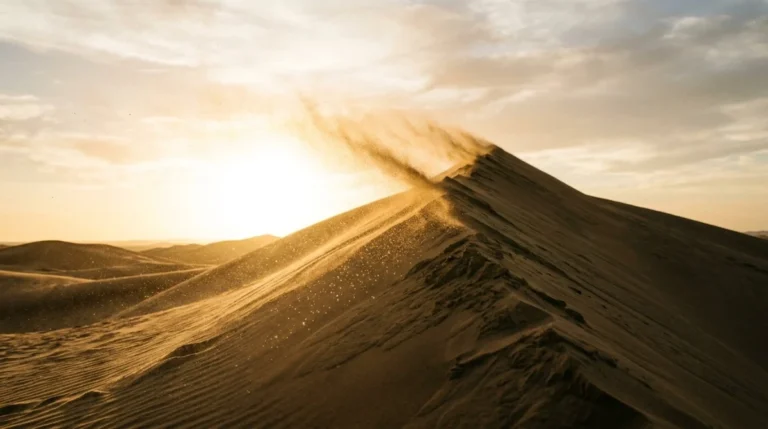
All the dune fields side by side, ranked by drive time, with the honest answer about where the red dunes are and why they are not here.
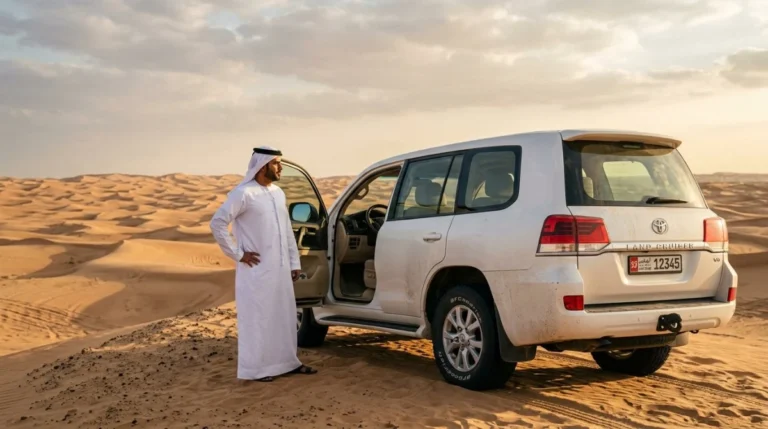
Sweihan Desert
The off-road crowd’s desert, out towards Al Ain. Bigger, steeper and emptier — and not somewhere to take a hire car.
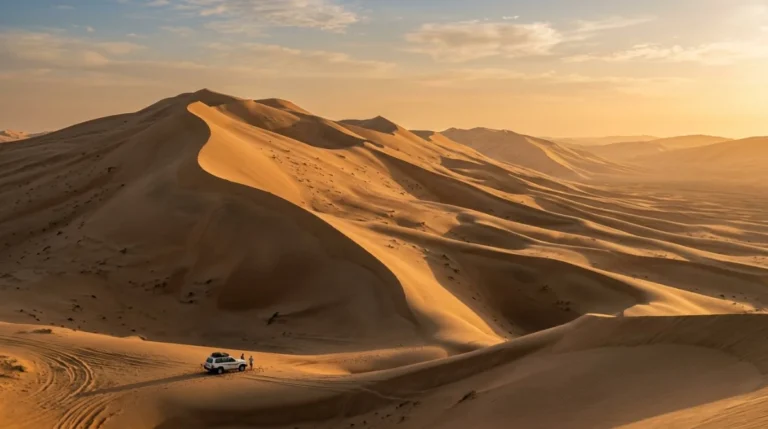
Liwa Desert
The real Empty Quarter, three hours south. Dunes the height of tower blocks. A full day or an overnight, never an evening trip.
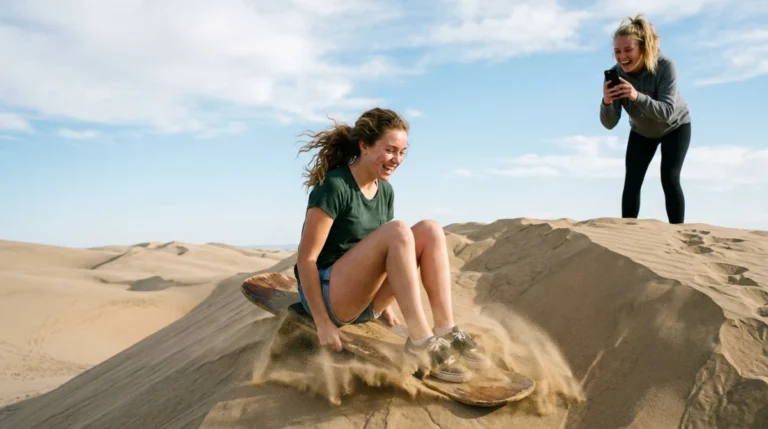
Moreeb Dune
The famous one at Liwa — a slope so steep cars race up it every winter. Worth the drive if you are already going that far south.
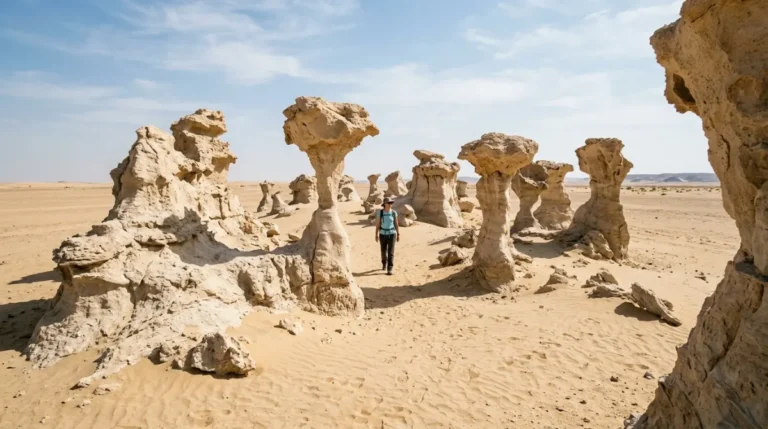
Fossil Dunes
Wind-carved shapes in stone rather than sand, forty minutes out of the city. Free, open, and a completely different photograph.
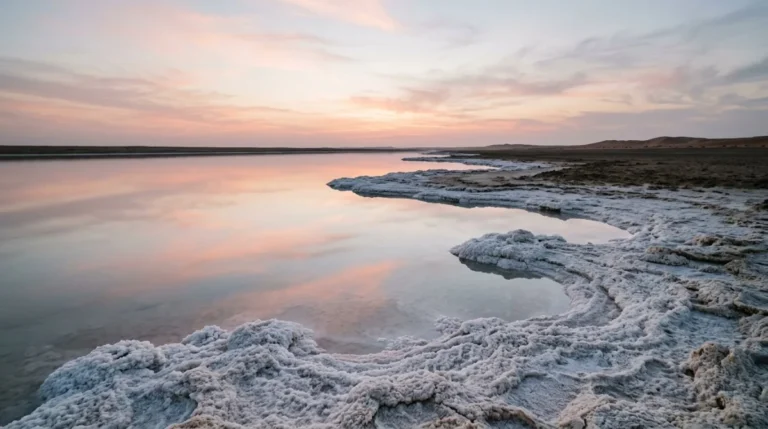
Al Wathba Salt Lake
A long salt flat south-east of the city that turns the colour of the sky at dawn. Best in the cool months, and best very early.
Only the first of those is where a standard safari goes. The rest are day trips, and we are happy to tell you which ones are worth your one spare morning — usually the fossil dunes if you have a few hours, and Liwa only if you have a whole day.
What lives out there
Let us be straight about this first: on an evening safari you will see sand, sky and possibly a camel. The desert’s animals are mostly nocturnal, mostly shy, and mostly somewhere else. Anyone promising you wildlife on a three-hour trip is selling you something.
That said, it is worth knowing what the landscape is holding. The Arabian oryx — the UAE’s national animal, the white antelope with the long straight horns — was extinct in the wild within living memory and exists today because of a breeding and reintroduction programme that Abu Dhabi drove. You are far more likely to meet one at Sir Bani Yas Island or on a reserve than on a dune, but the population out there is real.
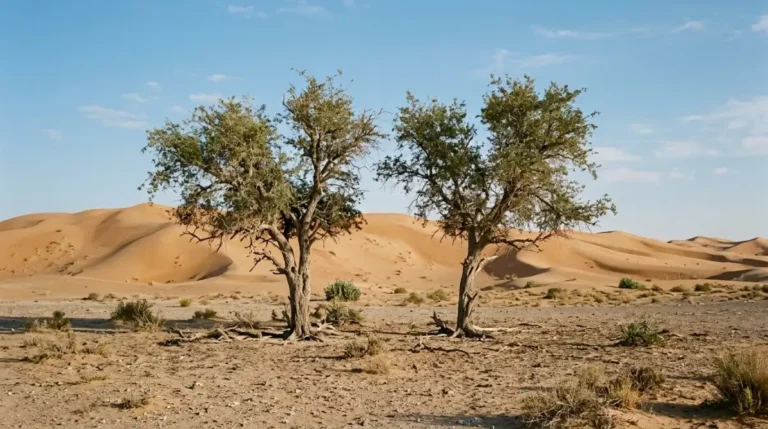
The ghaf tree is the one you will actually see, standing on the flat ground between dune fields with nothing else around it. It is the national tree, its roots go down further than the tree is tall, and for centuries it was what made a spot habitable: shade, animal feed and firewood in one plant.
Camels you will see, but almost all of them are owned. The herds along the roadside belong to somebody, and the ones at the camp are working animals, not wildlife.
The culture, honestly
A desert camp evening mixes two different things, and nobody in this business usually separates them for you. So here it is.
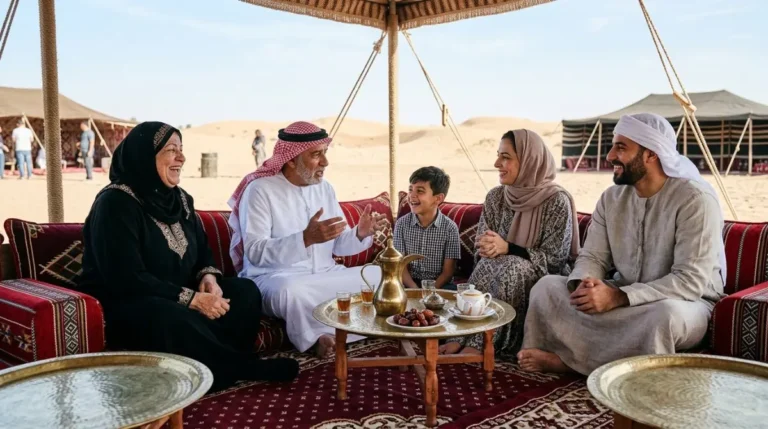
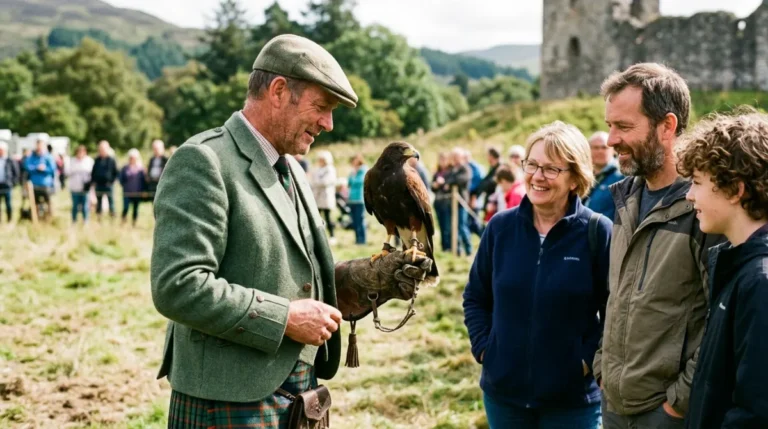
Genuinely Emirati, and formally recognised as heritage. The majlis — the seated gathering where guests are received — was added to UNESCO’s Representative List of the Intangible Cultural Heritage of Humanity in 2015. So was Arabic coffee, the qahwa poured from the long-spouted dallah into small cups and served with dates, which is why it reaches you before anything else does. Falconry is on the same list, and the UAE led its most recent extension in 2021. When a falcon comes out at the camp, that is not a costume; it is the one activity here with an unbroken line back to how people actually lived.
Genuine, but not from here. The tanoura is the spinning dance with the lit skirt. Its roots are Sufi, and the version you will see across the Gulf came by way of Egypt. It is beautiful and the performers are skilled. It is simply not Emirati, and we would rather say so than pretend.
Entertainment, and that is fine. Belly dance is not Emirati either — it belongs to Egypt and the Levant — and the fire show belongs to nobody in particular. Both are on the programme because guests enjoy them. Nobody is claiming they are Bedouin tradition, and you should be a little wary of any operator who does.
None of this makes the evening worth less. It just means you know what you are watching.
Five things that happen at the camp
The majlis
Carpets, low cushions and a circle. The oldest thing at the camp and the one people remember. A front-row cushioned bay with a back to the seat is AED 50 a head if you want it.
Falconry
A falcon on a gloved arm, close enough to see the feather detail. The photograph is AED 30 and it is the best thirty dirhams at the camp.
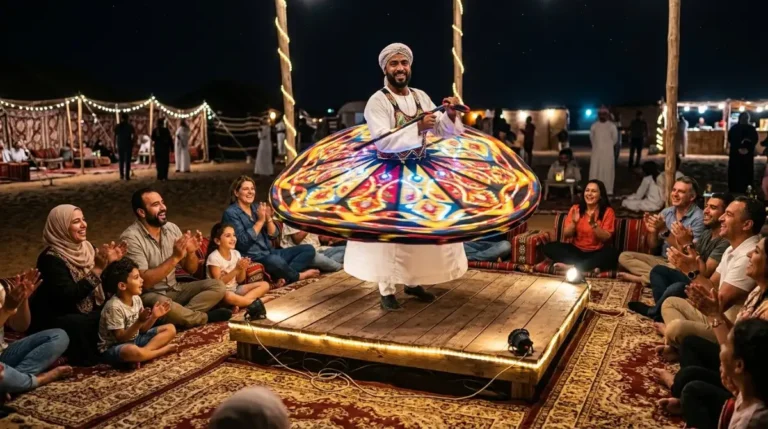
Tanoura dance
Twenty minutes of continuous spinning in a lit skirt. Sufi in origin, Egyptian in style, and genuinely hard to look away from.
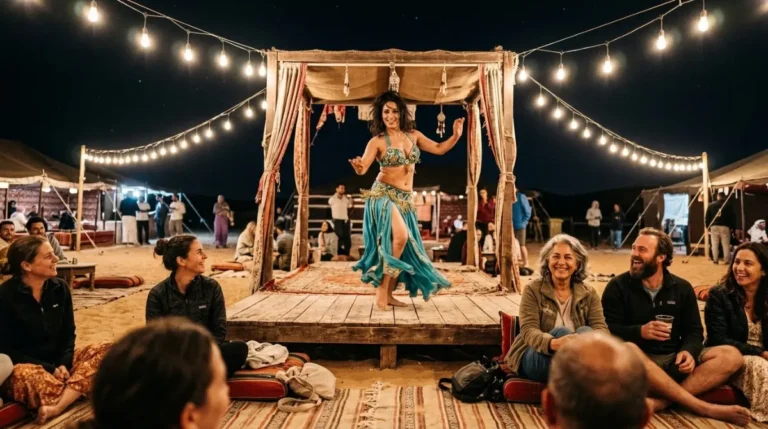
Belly dance
The middle act of the evening, usually after dinner starts. Modestly costumed, family audience, no photography of the performer without asking.
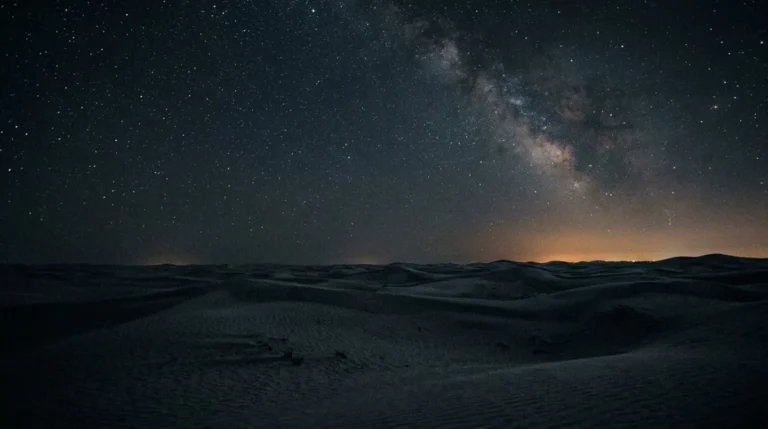
Stargazing
What you came for and did not know it. An hour from the city lights, on a moonless night, the Milky Way is visible with nothing but your eyes.
The night sky
The single most underrated thing about the Abu Dhabi desert is what happens when the camp lights go down. An hour inland is far enough to be out of the city’s glow, and on a clear moonless night between October and April you can see the Milky Way without any equipment at all.
An evening safari gives you a taste of it in the last half hour. If you actually want the sky, the overnight safari at AED 450 is the one — the camp empties around ten and what is left is silence and stars. Check the moon before you pick your date; a full moon washes out everything except the brightest stars, and the best time to go guide sets out which months give the clearest air.
Questions about the Abu Dhabi desert
How far is the desert from Abu Dhabi city?
About forty-five minutes to an hour inland for the dune fields we use at Al Khatim. The fossil dunes at Al Wathba are around forty minutes. Liwa and the Empty Quarter are roughly three hours south, which makes them a full day rather than an evening.
Are there red sand dunes in Abu Dhabi?
Not really. The sand around Abu Dhabi is pale gold. The deep red dunes in most photographs are further south in the Empty Quarter or in another emirate altogether, and anyone showing you a red dune as a picture of an Abu Dhabi evening safari is showing you somewhere else.
Is the desert safari show authentic Emirati culture?
Partly, and we would rather be clear about which parts. The majlis seating and the Arabic coffee ritual are both on UNESCO’s intangible heritage list from 2015, and falconry is on it too. The tanoura is Sufi and Egyptian in origin, and belly dance comes from Egypt and the Levant. All are worth watching; only some of them are local.
Will I see any wildlife on a desert safari?
Almost certainly not, beyond camels, and those are owned rather than wild. Desert animals are nocturnal and shy. If wildlife is what you want, a reserve or Sir Bani Yas Island is the honest answer rather than a three-hour evening trip.
Can I see the Milky Way from the Abu Dhabi desert?
Yes, on a clear moonless night between roughly October and April, with no equipment. You need to be away from the camp lights and you need the moon to be down or thin. The overnight safari is by far the best way to get that, because the camp goes quiet around ten.
Which desert should I visit if I only have one day?
Al Khatim for an evening safari, because it is close and the camp is there. If you have a full free day and a 4×4 or a driver, Liwa and Moreeb Dune are the ones worth the distance. The fossil dunes are the best short trip — free, forty minutes out, and unlike anything else here.
Six more desert guides
The wider UAE desert
Where our dunes sit in the bigger picture — the northern edge of the Rub’ al Khali, and what that means once you are standing in it.
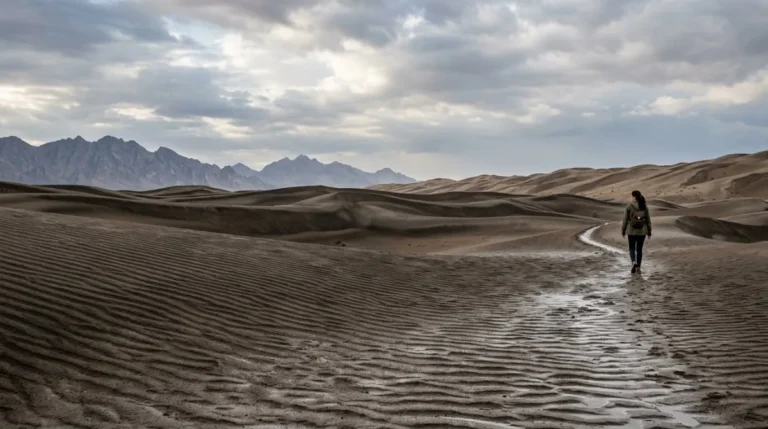
Camping out here
An AED 450 night with everything provided, or your own gear and a cool-season weekend. Both explained, cold nights included.
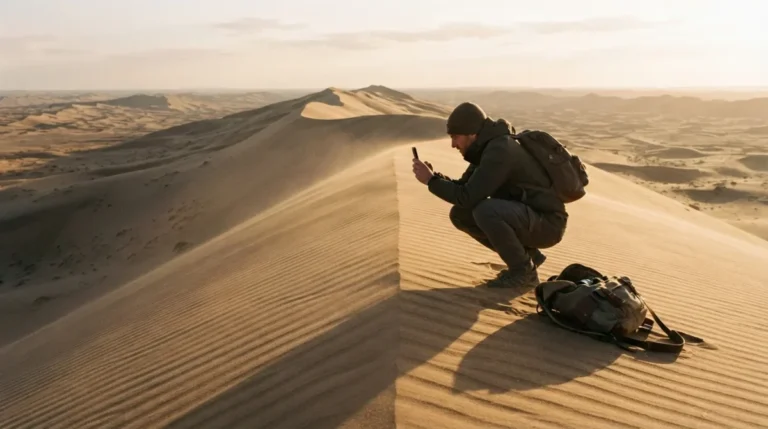
Photography spots
Five places, one hour of light, and what a phone genuinely manages out here. The drone question answered plainly.
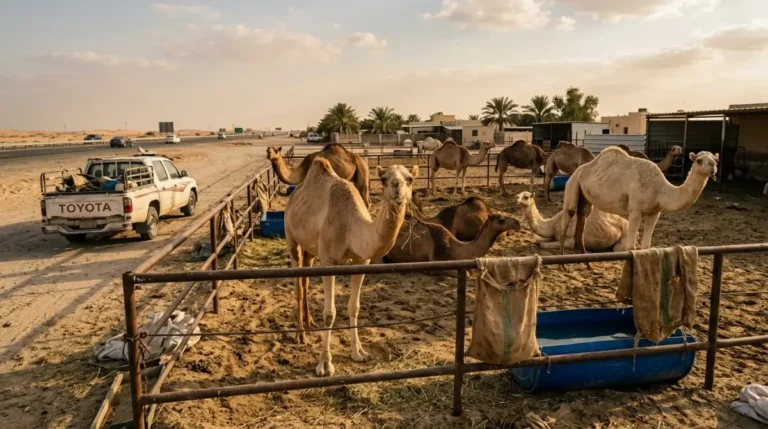
The animals
Camels and a falcon, reliably. Oryx and gazelle, honestly not — they live in reserves, not tourist camps.
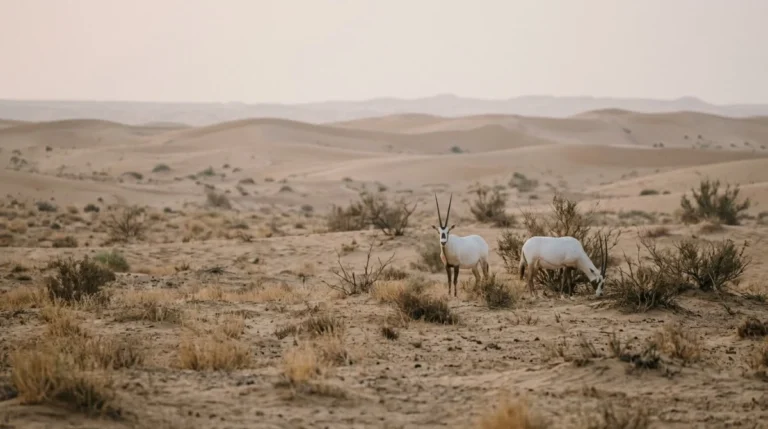
Conservation
The oryx came back from extinct-in-the-wild. What that took, and where an evening on the dunes honestly fits.
Facts and figures
Distances, temperatures, dune heights. Every number either checkable or printed elsewhere on this site — none invented.
Where to go next
Every place on this page has a page of its own: Al Khatim, Sweihan, Liwa, Moreeb Dune, the fossil dunes and the salt lake. For what you actually do out there, see desert activities. Every package and pickup time is on the prices and timings page, and the best time to go guide compares all twelve months.
Tell us what you want from the desert and we will point you at the right one
An evening at the camp, a sunrise on empty dunes, or a full day south to Liwa — they are very different trips. Send us your dates and how long you have. A real person replies, usually within a few minutes.